Big Obsidian Flow
Tucked inside the caldera of Newberry Volcano, the Big Obsidian Flow is the youngest lava flow in Oregon — a glittering, mile-wide river of volcanic glass that cooled a mere 1,300 years ago. A short interpretive loop climbs a steel staircase onto the flow itself, winding between car-sized boulders of jet-black obsidian and pale, frothy pumice. From the top, the views take in Paulina Peak, Paulina Lake, and the forested rim of the caldera. It is a short walk with an outsized payoff, and one of the strangest landscapes you can stand on anywhere in the Northwest.


Hours of Operation
The Big Obsidian Flow Trailhead and Interpretive Site is open from June through late fall, depending on snow. Paulina Lake Road (County Road 21) into the caldera typically opens once the snow melts in late spring, so check current road conditions before heading up early or late in the season.
Day use only; no overnight camping is allowed at the trailhead.
Admission
Northwest Forest Pass: $30 annual pass or $5 for Day Pass (https://www.fs.usda.gov/r06/passes)
Rules
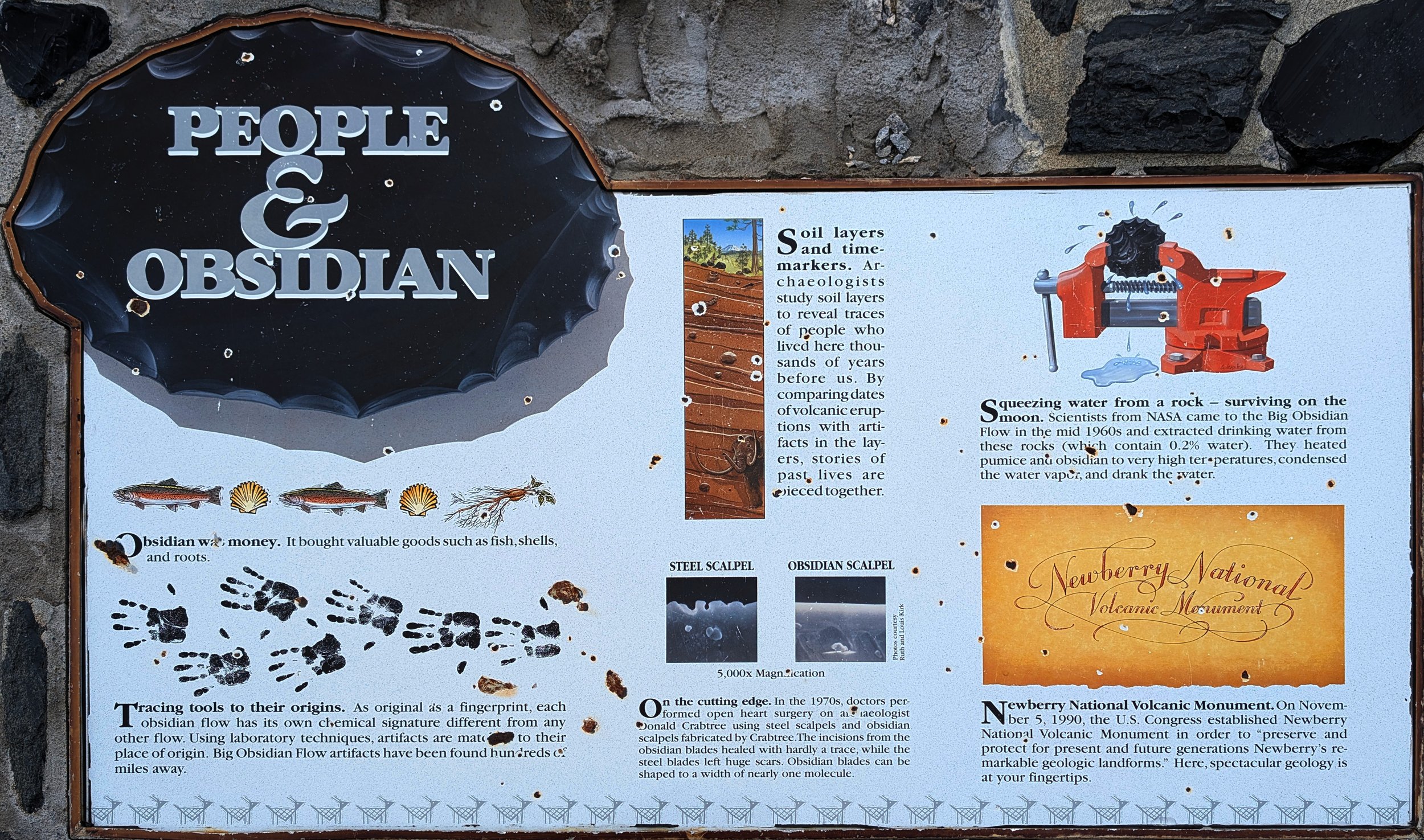
Collecting obsidian is prohibited anywhere within Newberry National Volcanic Monument
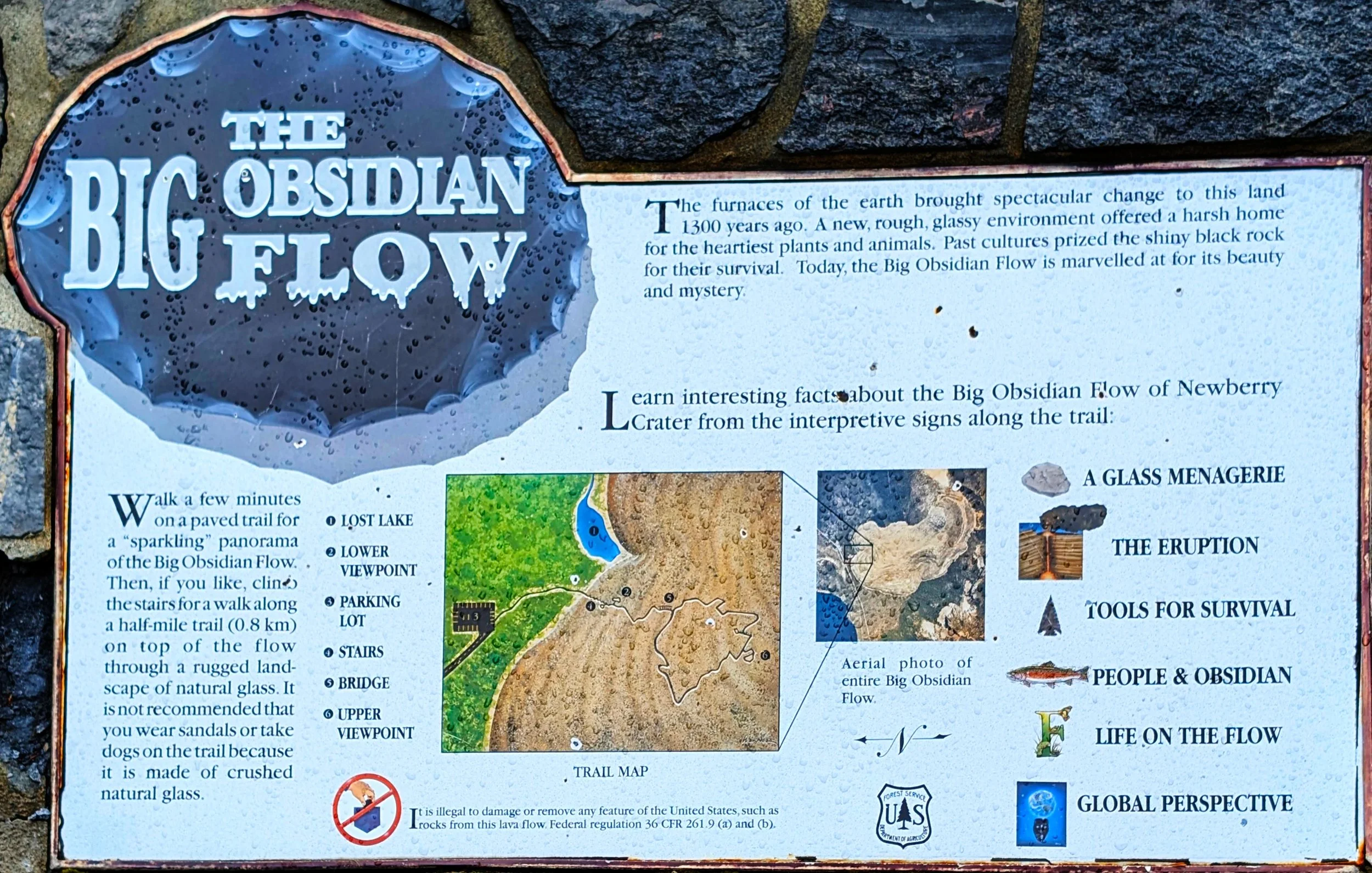
No dogs on the obsidian flow — the glass is sharp enough to cut paws
Amenities
Picnic tables
Vault toilets
Amphitheater with ranger-led programs during the summer season
Equipment
Sturdy shoes or boots. The trail it rugged with loose gravel, uneven surfaces, and sharp rocks.
Water
Sunscreen, sunglasses, and a hat for sunny days.
Dress for the weather. The wind can pick up, and the temperature can drop significantly.
Approach
The Big Obsidian Flow is about 39 miles from Bend. Travel 24 miles south on Highway 97, then turn east onto Paulina Lake Road (County Road 21) and continue 15 miles into the Newberry Caldera. The trailhead is on the south side of the road, past Paulina Lake.
Trail at a glance
Distance: ~1 mile lollipop loop
Elevation gain: ~200 feet
High point: ~6,600 feet
Difficulty: Easy; family-friendly
Newberry National Volcanic Monument
Newberry National Volcanic Monument was designated in 1990 to protect the area around Newberry Volcano, a massive shield volcano south of Bend. At its summit, the collapsed caldera holds two alpine lakes full of trout — Paulina Lake and East Lake — along with waterfalls, hot springs, and more hiking than you can fit into a single day. The monument also includes Lava Butte and the Lava Lands Visitor Center, which we covered in our Lava Butte Lookout post. Back then we said the Newberry Caldera was a future destination. This is that trip.
The landscape here was otherworldly enough that NASA used Newberry Volcano to train Apollo astronauts from 1964 to 1966.
Big Obsidian Flow
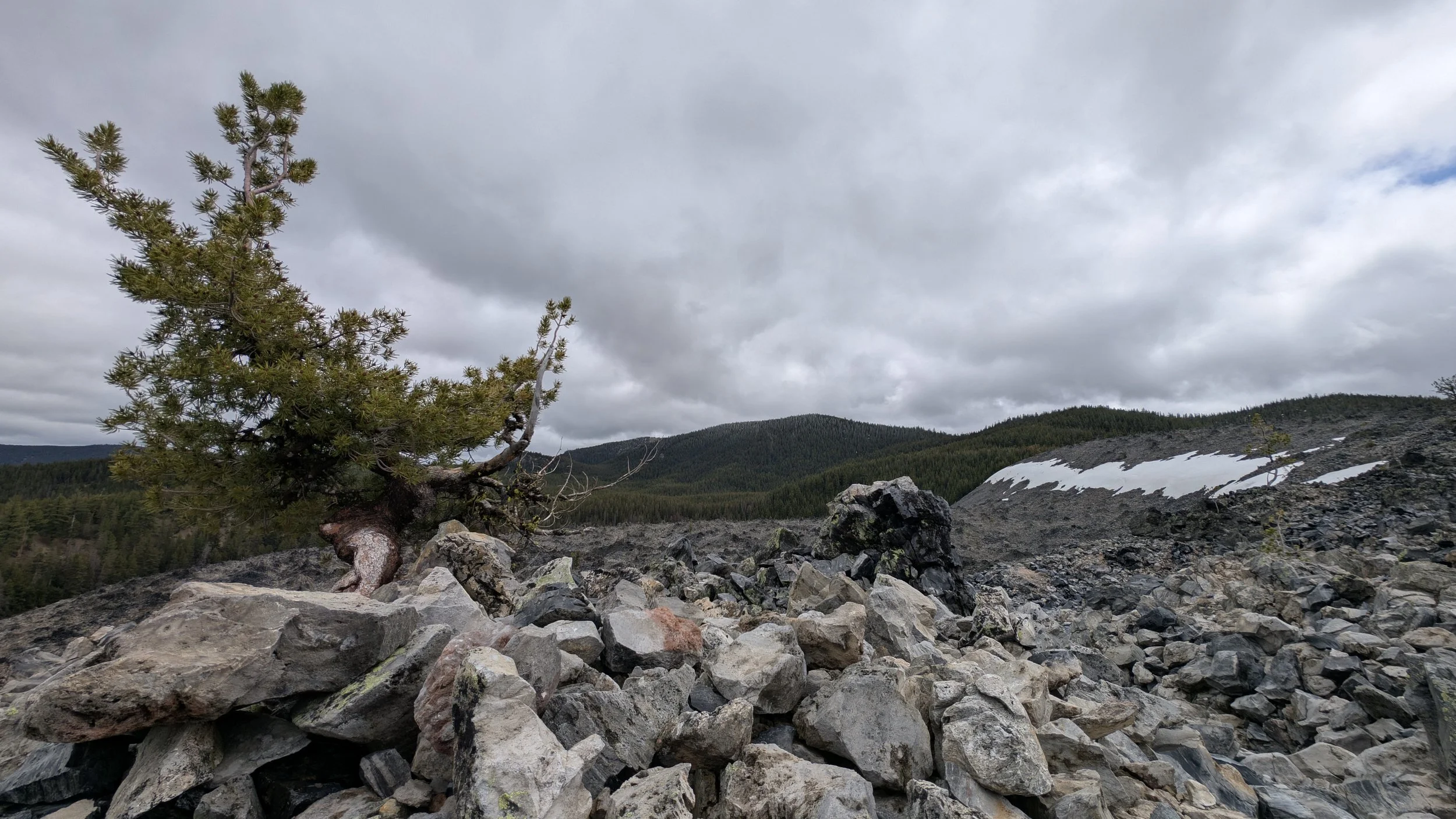
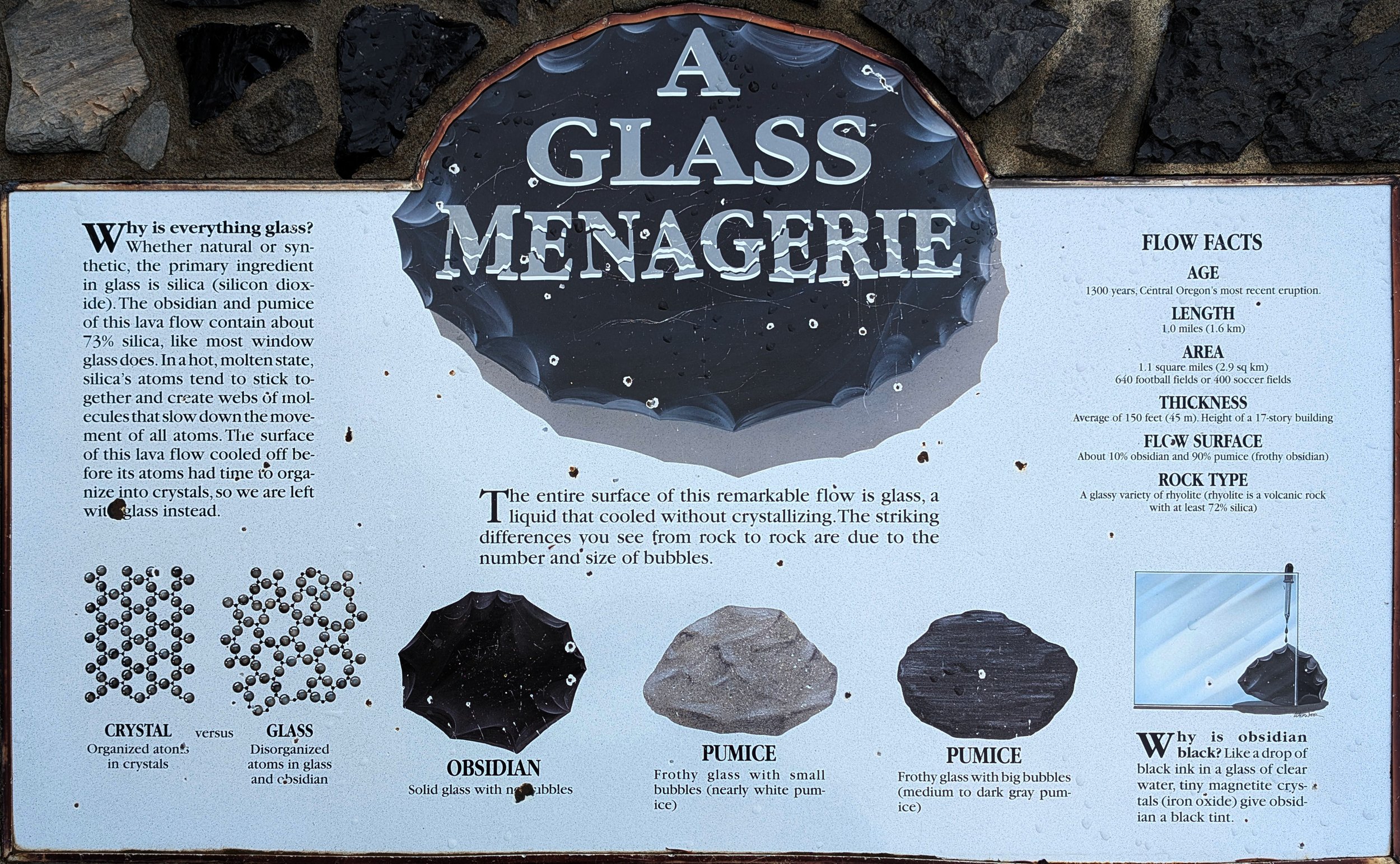
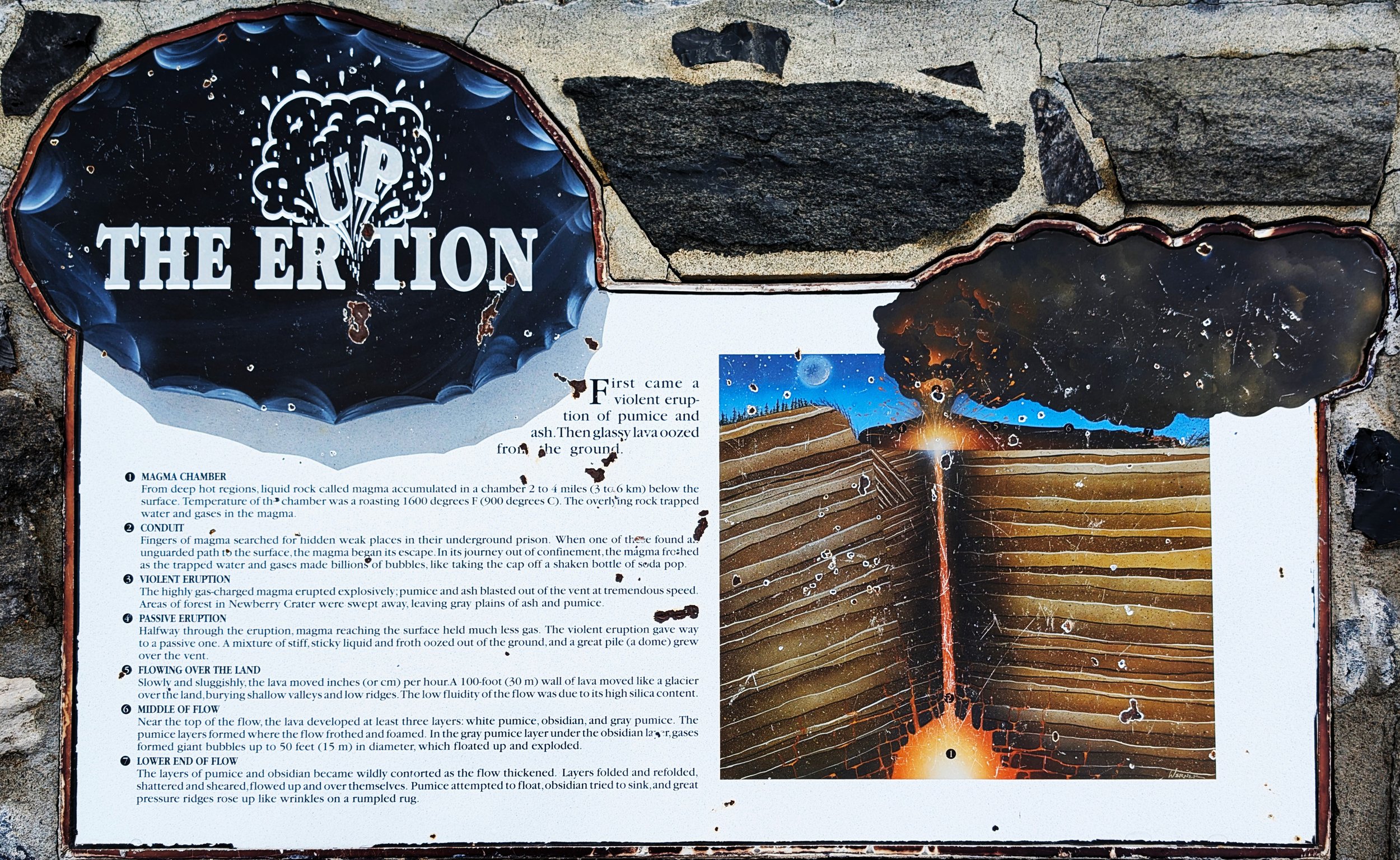
About 1,300 years ago, a vent near the south wall of the Newberry Caldera erupted. The eruption began explosively, blanketing the area with pumice and ash, then slowed into an oozing flow of thick, silica-rich lava. That lava cooled so quickly that crystals never had time to form, leaving behind volcanic glass — obsidian. The flow spread across roughly 700 acres, a little over a square mile.
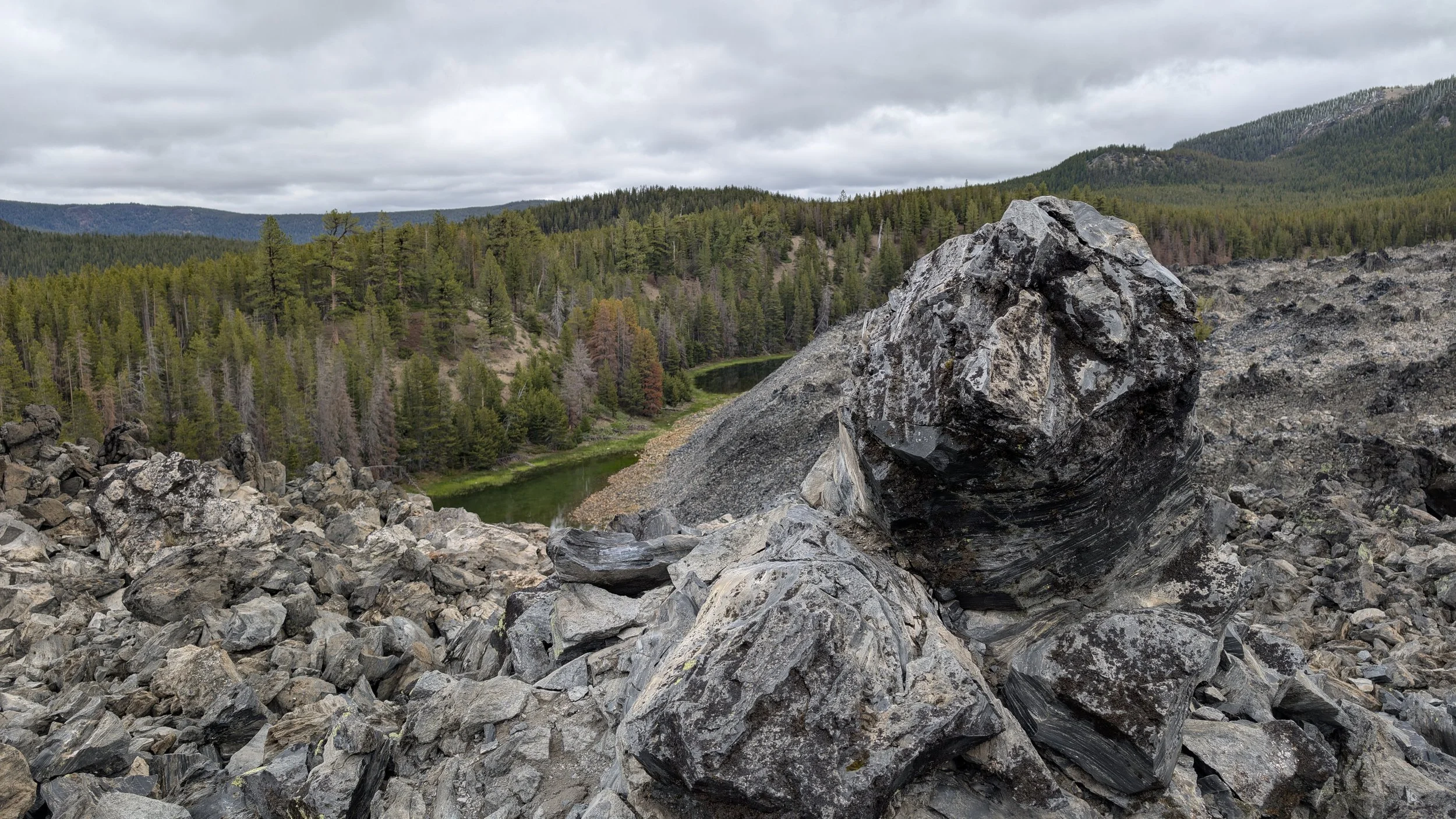
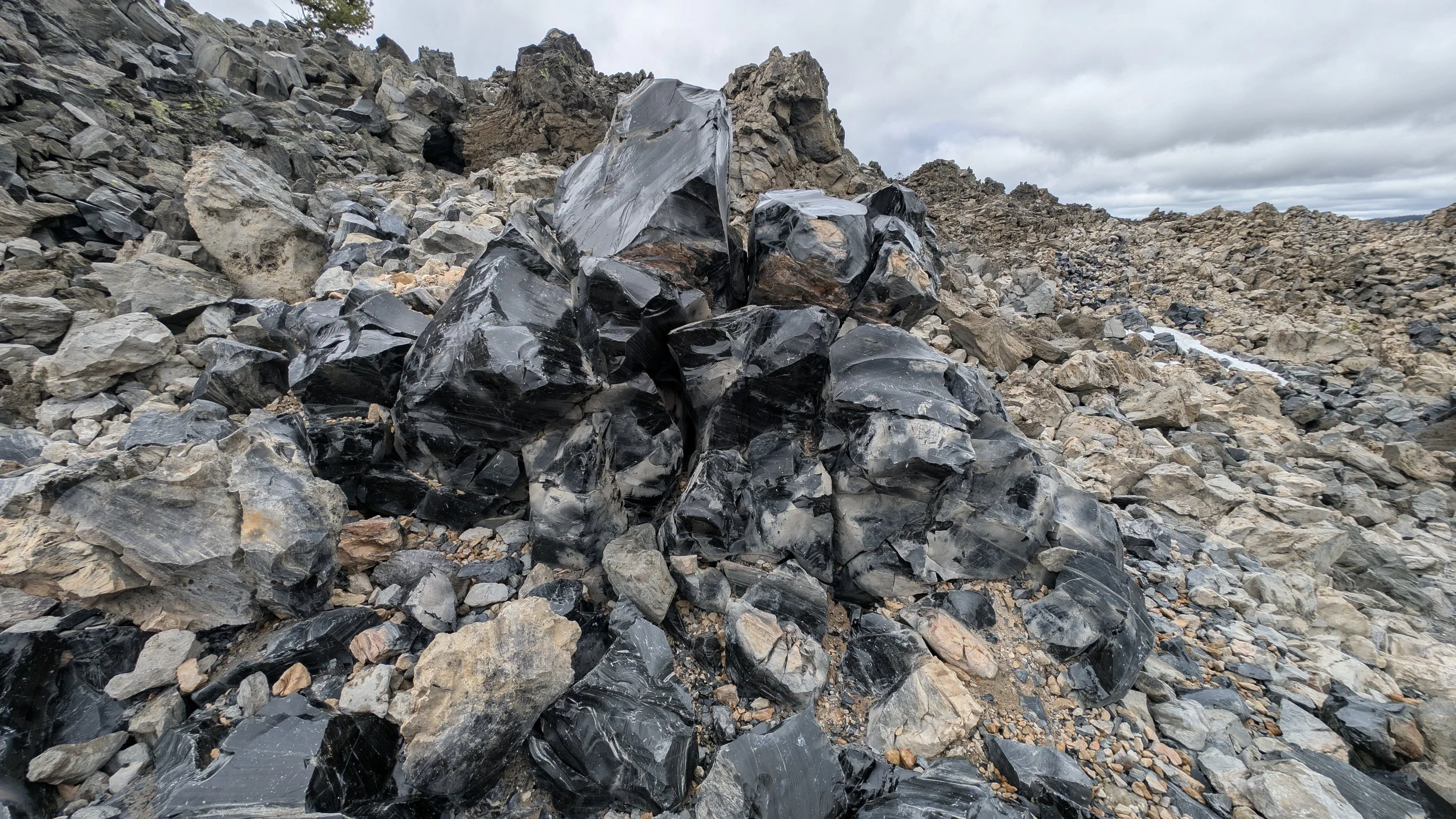
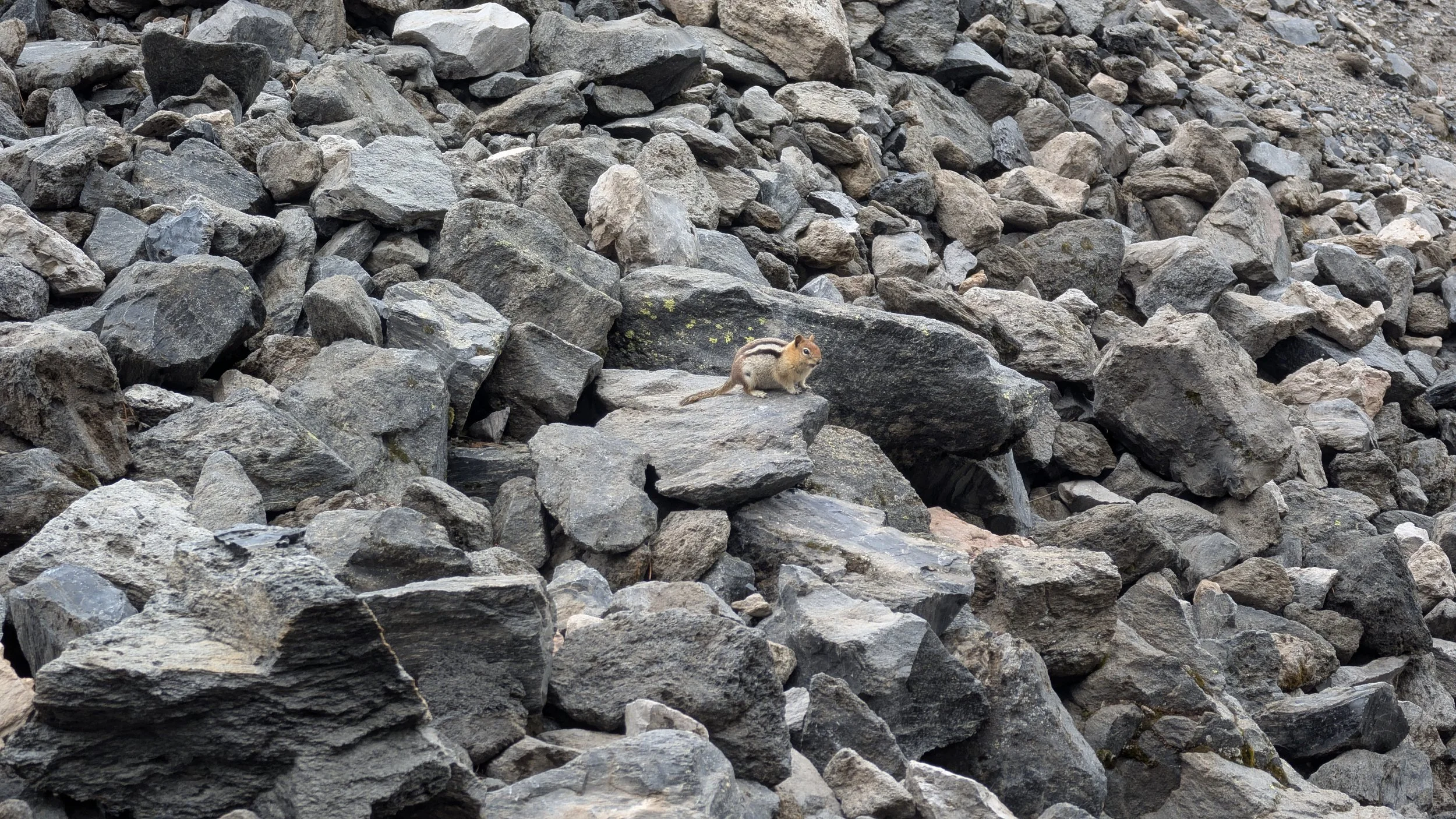
The flow formed in layers: white pumice on top, glassy obsidian in the middle, and gray pumice at the base. Walk the trail and you will see all three, often in the same boulder — streaks of black glass banded with gray and frothy white stone so light it seems like it should float. (Pumice actually can.)
The flow is obscured from the parking lot, which was nearly empty. From the trailhead, the path crosses a short stretch of pumice-covered ground before reaching the steel staircase that climbs the steep front of the flow. The stairs handle most of the elevation gain in one go, and at the top the trail levels out onto the surface of the flow itself.
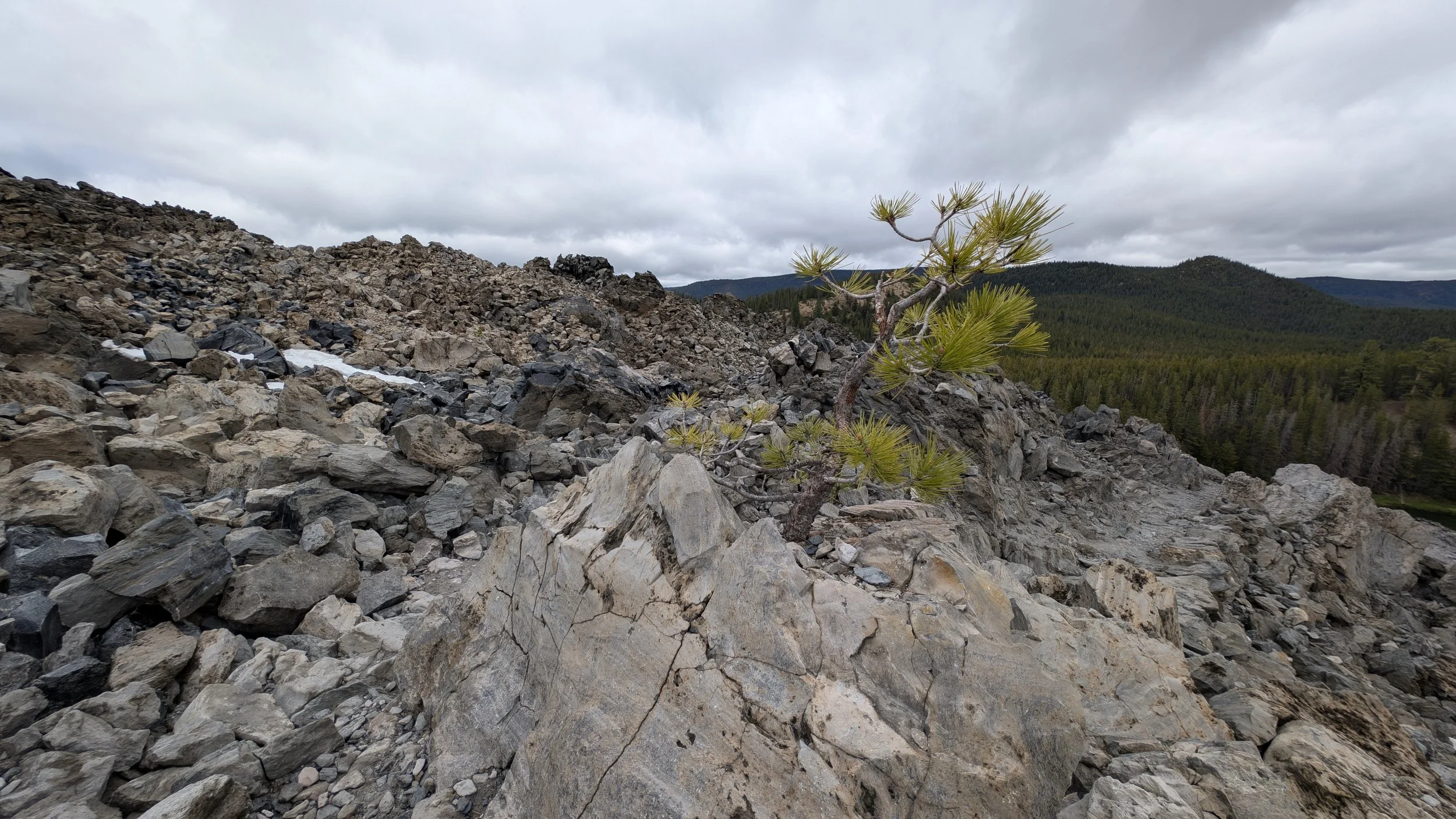
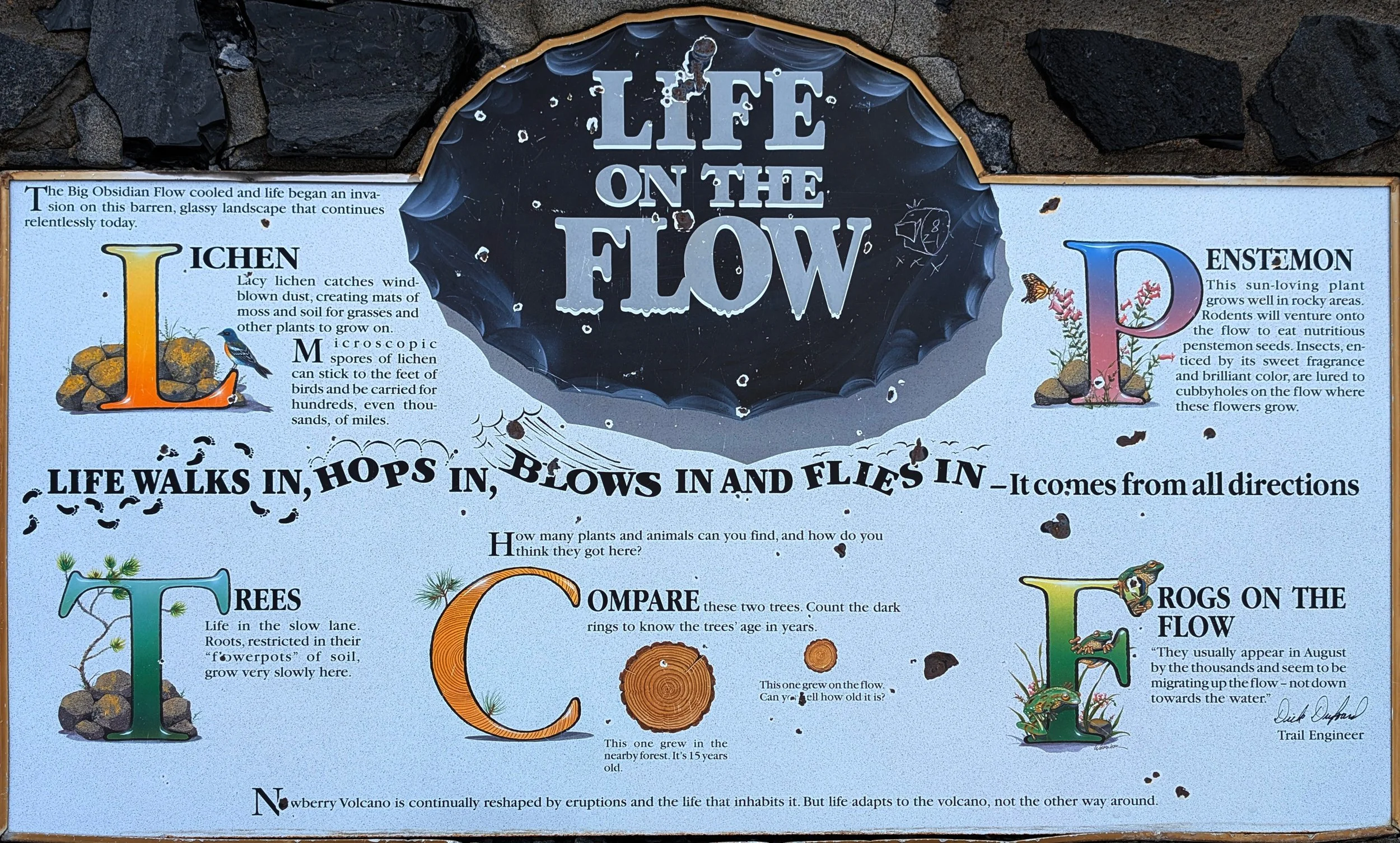
Up top, the trail becomes a lollipop loop through a jumble of black glass and stone. Interpretive signs along the way explain the eruption and how the flow formed. Look closely and you'll find whitebark pines that have managed to take root in the rubble — a remarkable sight in a place that looks almost too harsh for anything to grow.
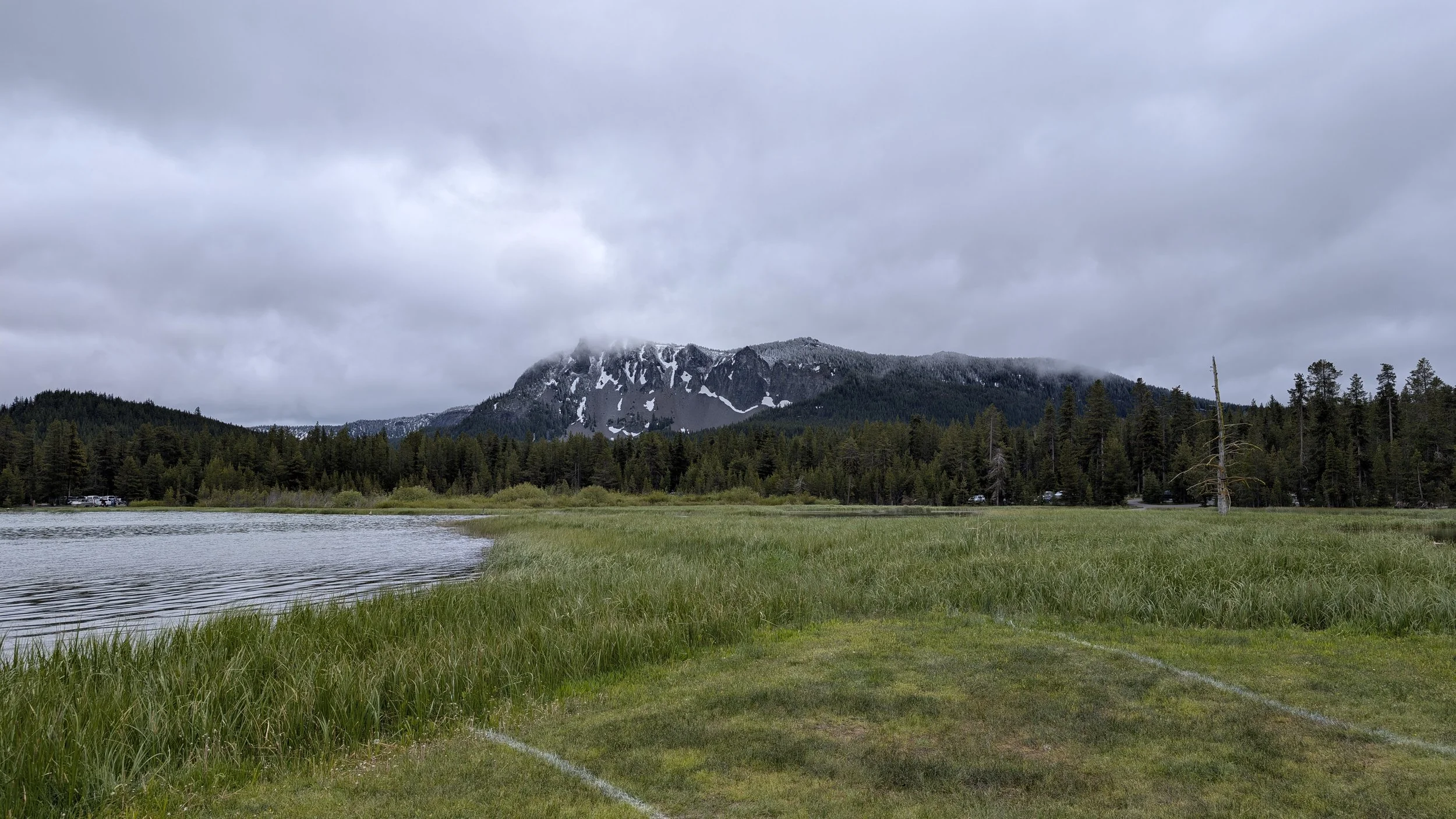
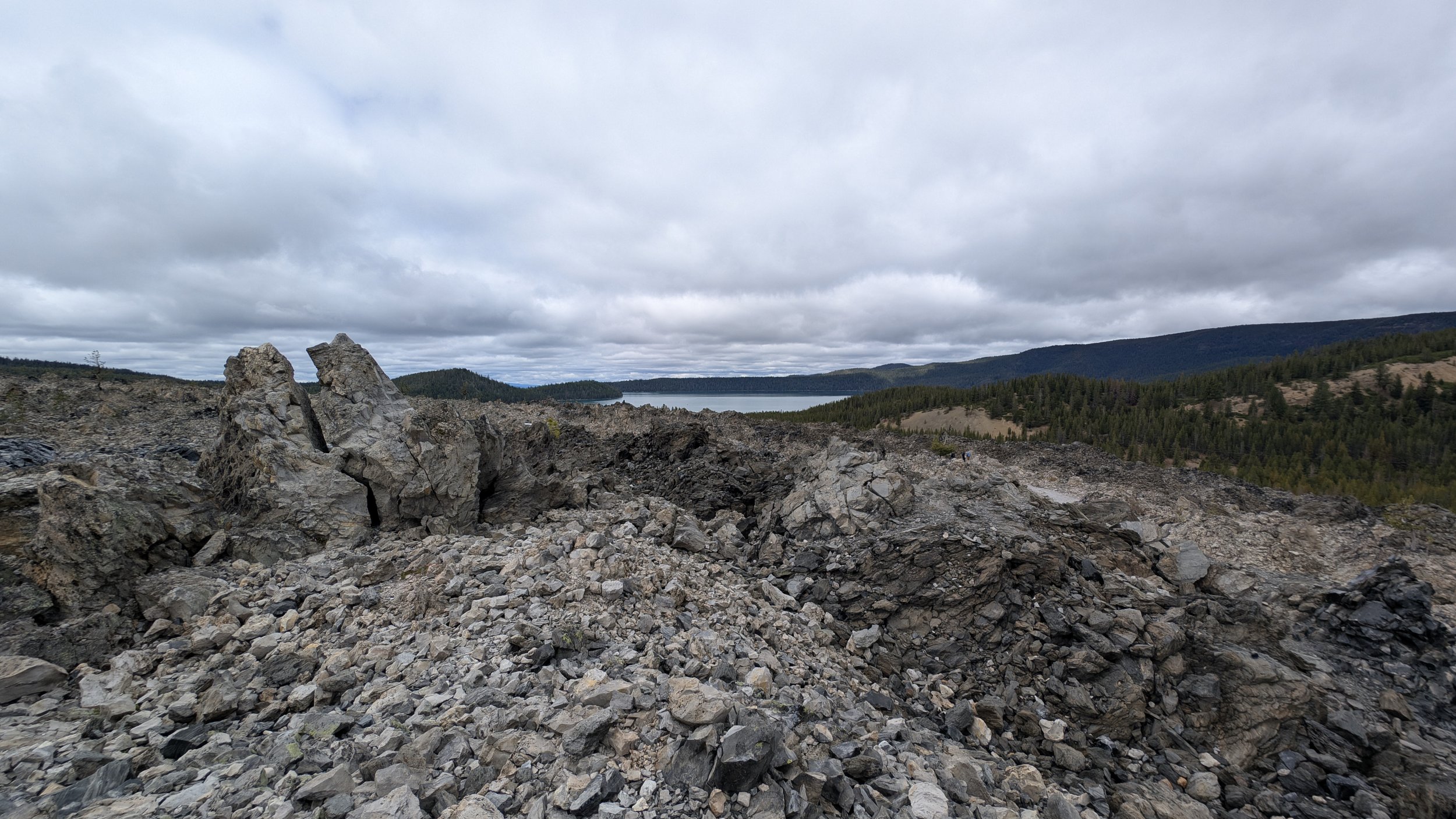
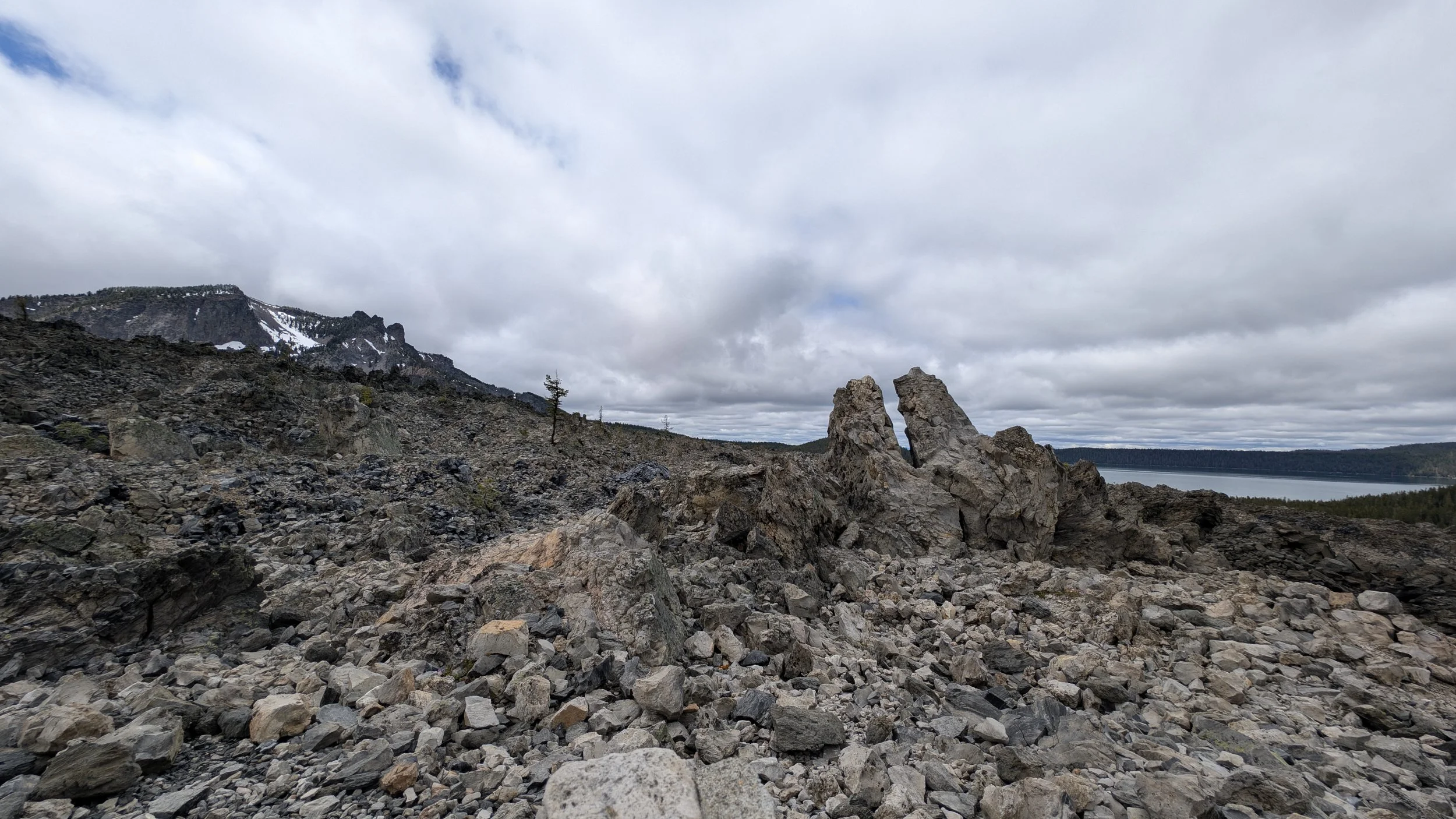
At the high point of the loop, the views open up. Paulina Peak rises to the south, the highest point on the caldera rim. To the north, Paulina Lake spreads out below, and the small Lost Lake ponds sit just beyond the edge of the flow.
While the overall look is reminiscent of Craters of the Moon National Monument in Central Idaho, there is no comparison on the ground. The black glass of the obsidian boulders takes this experience to another level. Craters of the Moon offers caves and a much larger landscape to explore. However, the Big Obsidian Flow has gorgeous scenery surrounding it.
Completing the loop, the trail returns to the top of the staircase and descends back to the trailhead. There were several more cars in the parking lot now; half of them must have just arrived because several people exited them simultaneously.
Summary
The Big Obsidian Flow is one of the most unusual short hikes in Oregon. At about a mile with a single staircase climb, it is easy enough for nearly anyone, yet the scenery is unlike anywhere else — a hillside of volcanic glass, only 1,300 years old, with lake and mountain views from the top. Pair it with Paulina Falls, the drive up Paulina Peak, or a stop at the lakes, and the Newberry Caldera makes for a full day of exploring.
This is one I won’t soon forget. It is such a magical experience. The incredible forested surroundings, the twin lakes, and a smaller waterfall (Paulina), with the flow right in the midst of it all. I have not encountered anything like it. It is difficult to describe and explain just what it was like to visit this amazing location in central Oregon.
Surrounding Area
Petersen Rock Garden and Museum
Lava River Cave
High Desert Museum
Lava Butte Lookout
Newberry Volcanic Monument Visitor Center