Lava Butte Lookout, Bend, Oregon
Rising like a cinder cone sentinel just south of Bend, Lava Butte offers one of Central Oregon's most rewarding short hikes for the payoff it delivers — a fire lookout perched atop a 500-foot volcanic cone with 360-degree views stretching across the Cascade peaks, the sprawling lava fields of Newberry National Volcanic Monument, and the ponderosa forests below. Whether you tackle the steep half-mile trail on foot or catch the seasonal shuttle to the summit, the lookout rewards visitors with a front-row seat to the region's fiery geologic past and a panorama that makes it easy to see why this spot has been used to spot wildfires — and stunning sunsets — for generations.
Hours of Operation
The Lava Butte Interpretive Site is accessible to personal vehicles or via shuttle ride between mid-April and mid-October. Visitors without motorized vehicles may access the butte from dawn to dusk year-round; access in winter depends on snow levels.
Admission
Northwest Forest Pass: $30 annual pass or $5 for Day Pass (https://www.fs.usda.gov/r06/passes)
Shuttle (2026) (For current information, check the Lava Butte Interpretive website)
Schedule | June 13 - September 7, 2026 (operating Labor Day Weekend Friday-Sunday) | 10 a.m. – 4:30 p.m. | Daily
The shuttle departs from Lava Lands Visitor Center and the top of Lava Butte every 20 minutes between 10 a.m. to 4:30 p.m.
Cost: $5/person (Children 5 and under ride FREE)
Tickets can be purchased inside the Lava Lands Visitor Center bookstore
Tickets can also be purchased using the CET Go app
Shuttles are wheelchair accessible
Transport available for bicycles and leashed dogs
Access by personal motor vehicles is not permitted on days when the shuttle is in service
Equipment
Comfortable shoes or boots
Dress for the weather. The wind can pick up, and the temperature can drop significantly at the lookout.
Approach
The Lava Butte Interpretive Site is 13 miles south of Bend via Highway 97 and Forest Road 100—and is seven miles northeast of Sunriver via South Century Drive, Highway 97, and Forest Road 100.
Newberry National Volcanic Monument
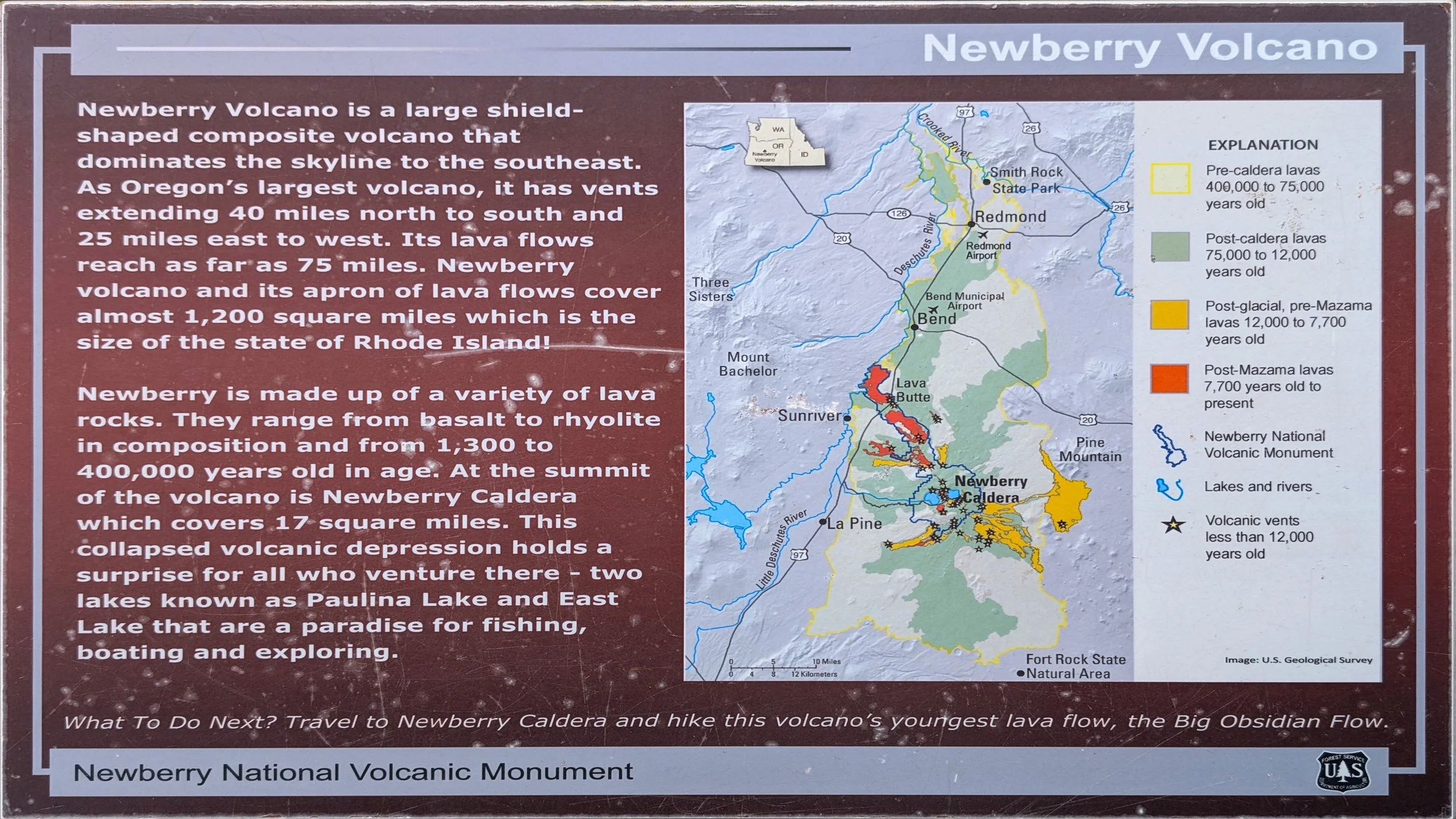
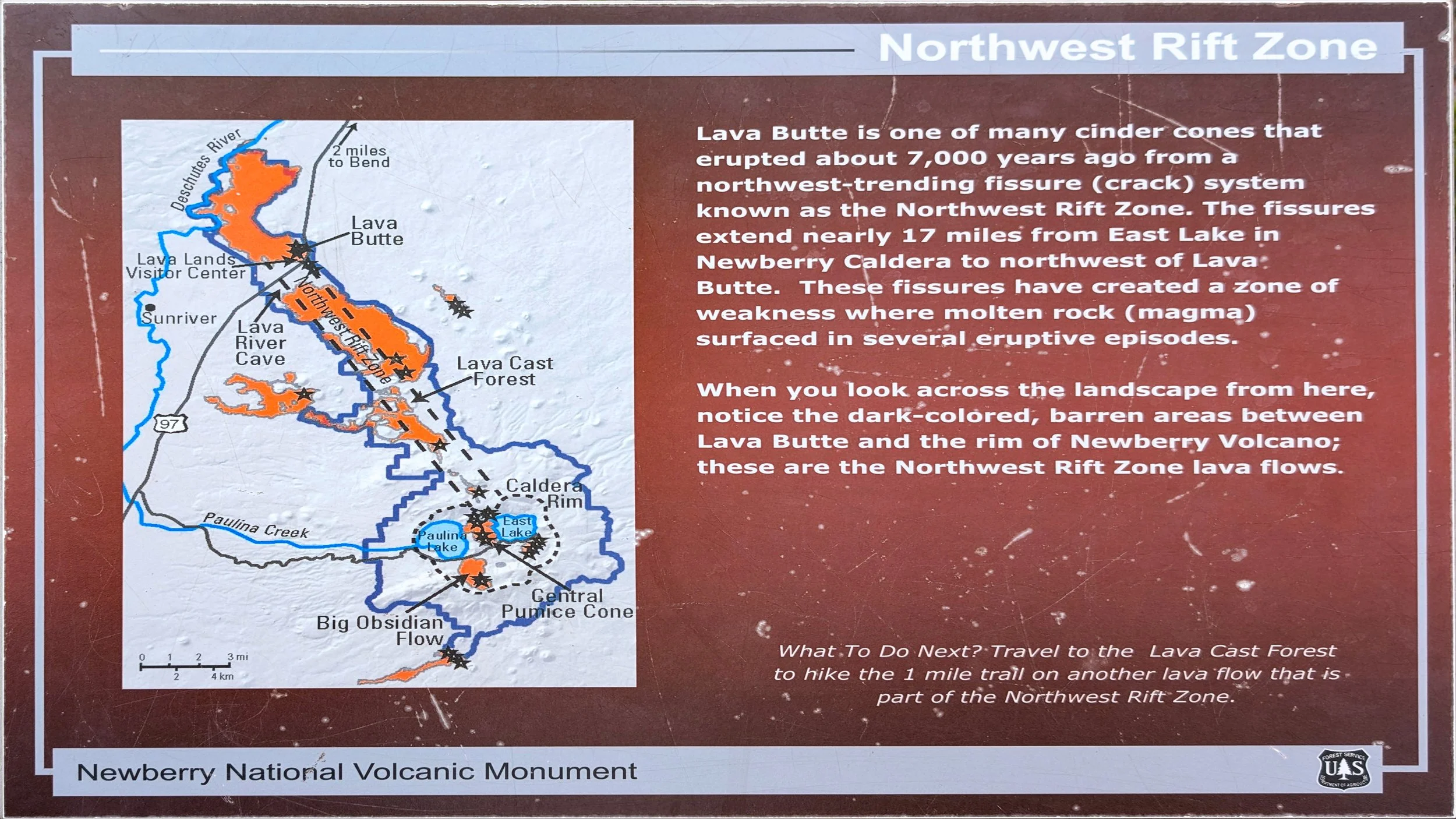
The Newberry National Volcanic Monument is a massive multi-acre lava field. It contains multiple hiking trails, a couple of waterfalls along the lava outskirts, and the Lava Butte Lookout. From the Visitor Center, you can access the Lava Butte Lookout and the Trail of the Molten Land hiking trail. The lookout was what we focused on, and the rest we are saving for another trip.
Lava Butte Lookout
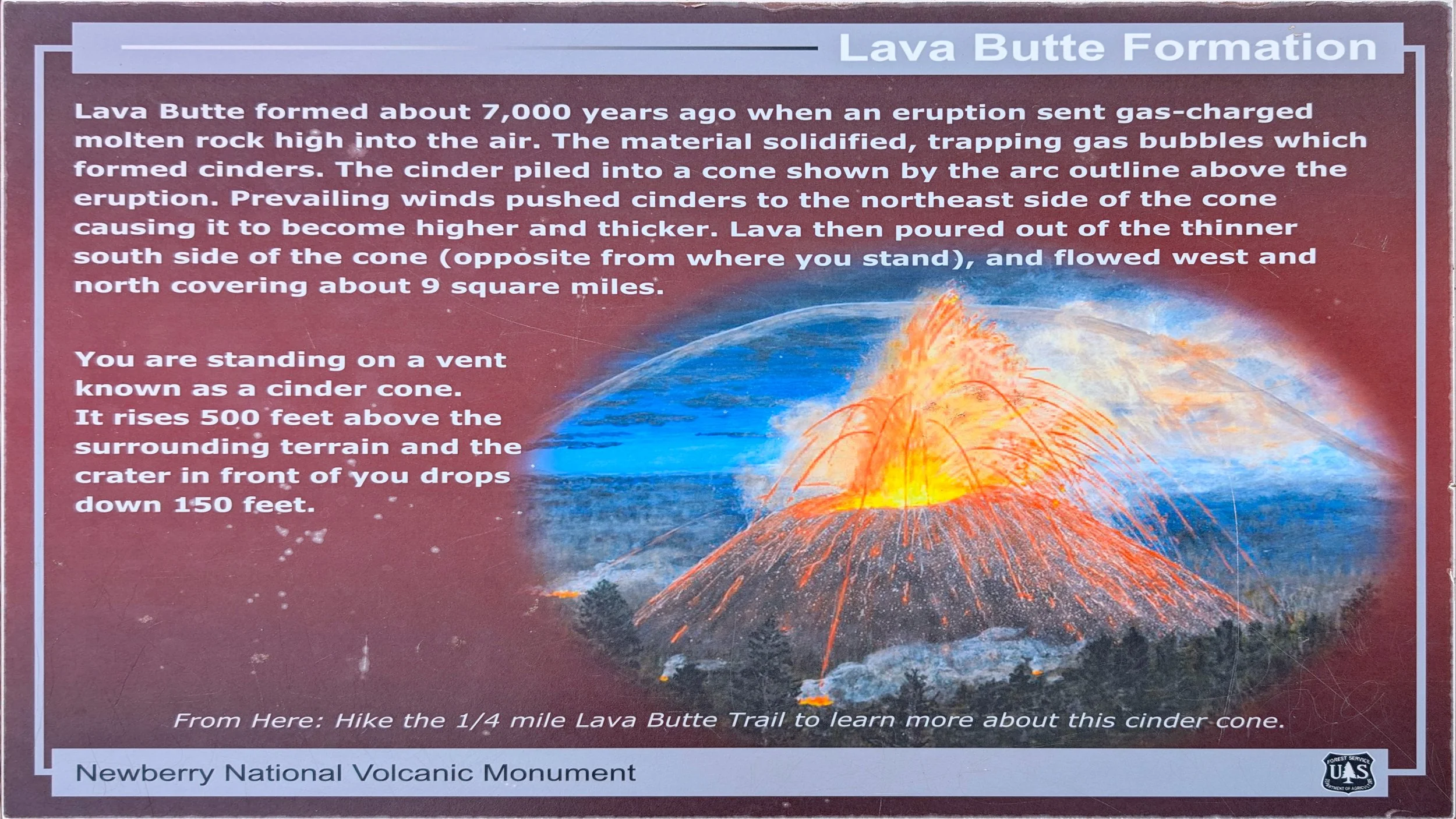
Lava Butte Lookout rises above the landscape, a towering icon in an otherwise flat area of central Oregon. The 500 foot elevation seems far greater in such a landscape. This cinder cone developed 7,000 years ago when a volcanic eruption sent molten rock shooting into the air, forming cinders. These cinders piled atop one another forming the cone of Lava Butte. Wind caused these cinders to pile thicker on the northeast side of the cone.
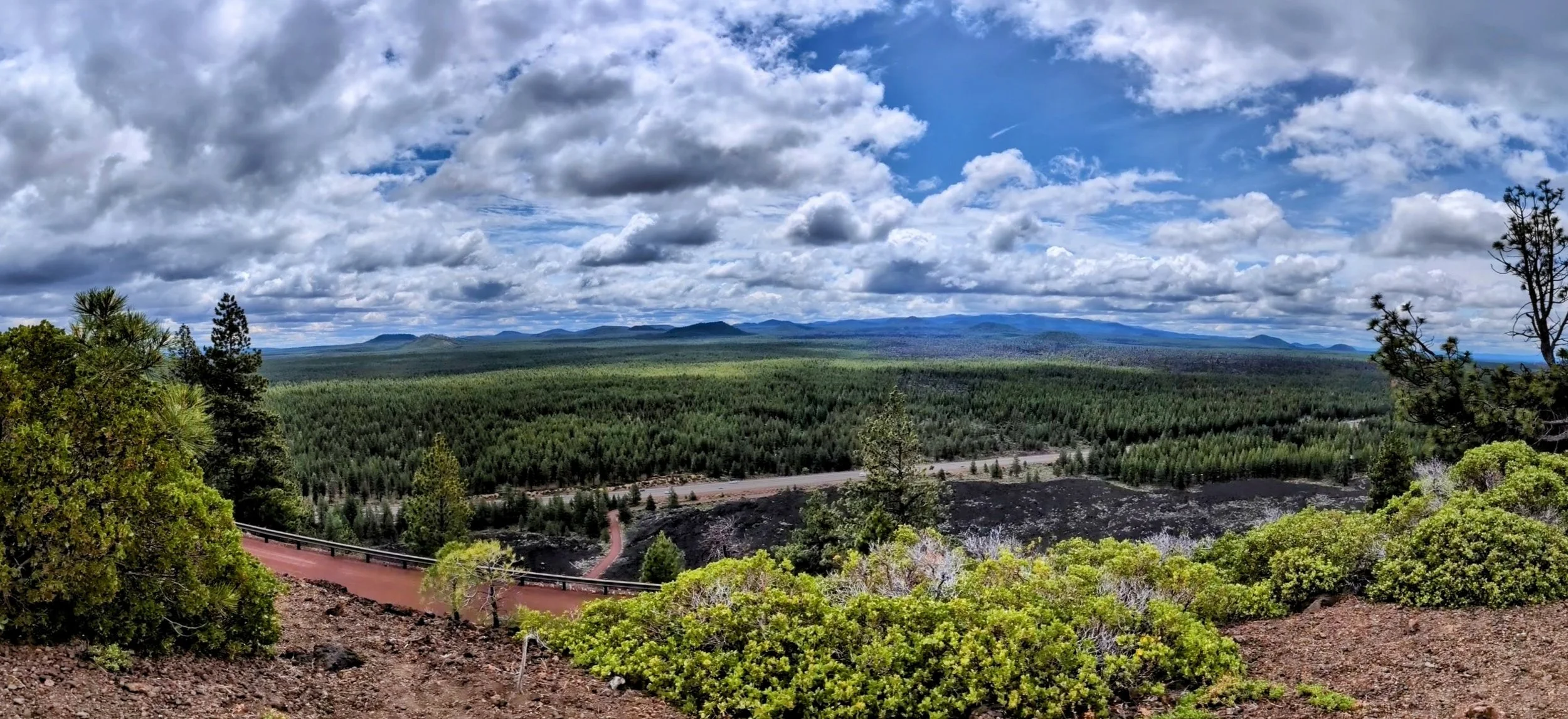
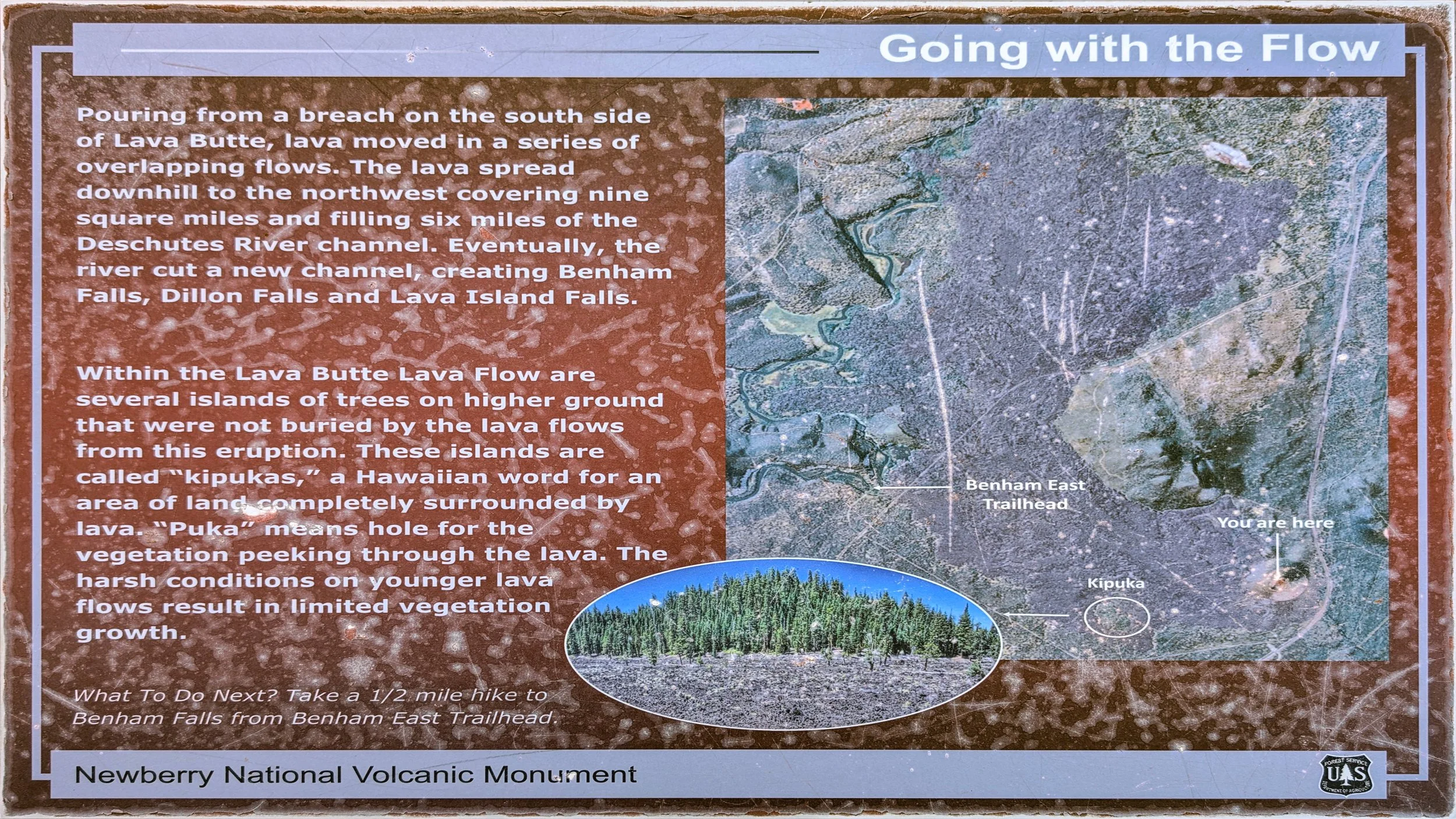
Lava then poured out of the thinner southwest side and filled the valley, covering about 9 square miles. The lava moved in overlappiong flows as it spread. It eventually filled six square miles of the Deschutes River channel, but the river eventually cut a new channel. In the process, Benham, Dillon, and Lava Island Falls were formed.
WIthin the Lava Butte Lava Flow are several patches of trees on higher ground. These vegetation islands are called “kipukas,” a Hawaiian word for an area of land completely surrounded by lava.
From the visitor center, we purchased our shuttle ticket and waited at the designated boarding area for the shuttle to arrive. Minutes later, the shuttle pulled up and unloaded the batch of returning guests. Once empty, we boarded the shuttle and were quickly off to ascend the cinder cone. The drive is one big left turn, as the shutle slowly and methodically cruises up the road to the top of the cone.
Disembarking from the shuttle we immediately noticed the change in the weather pattern. At the visitor center, we were comfortable, the weather was calm and overcast. Atop the cinder cone, the weather was windy and chilled. We were immediately slightly uncomfortable as we took in our surroundings.
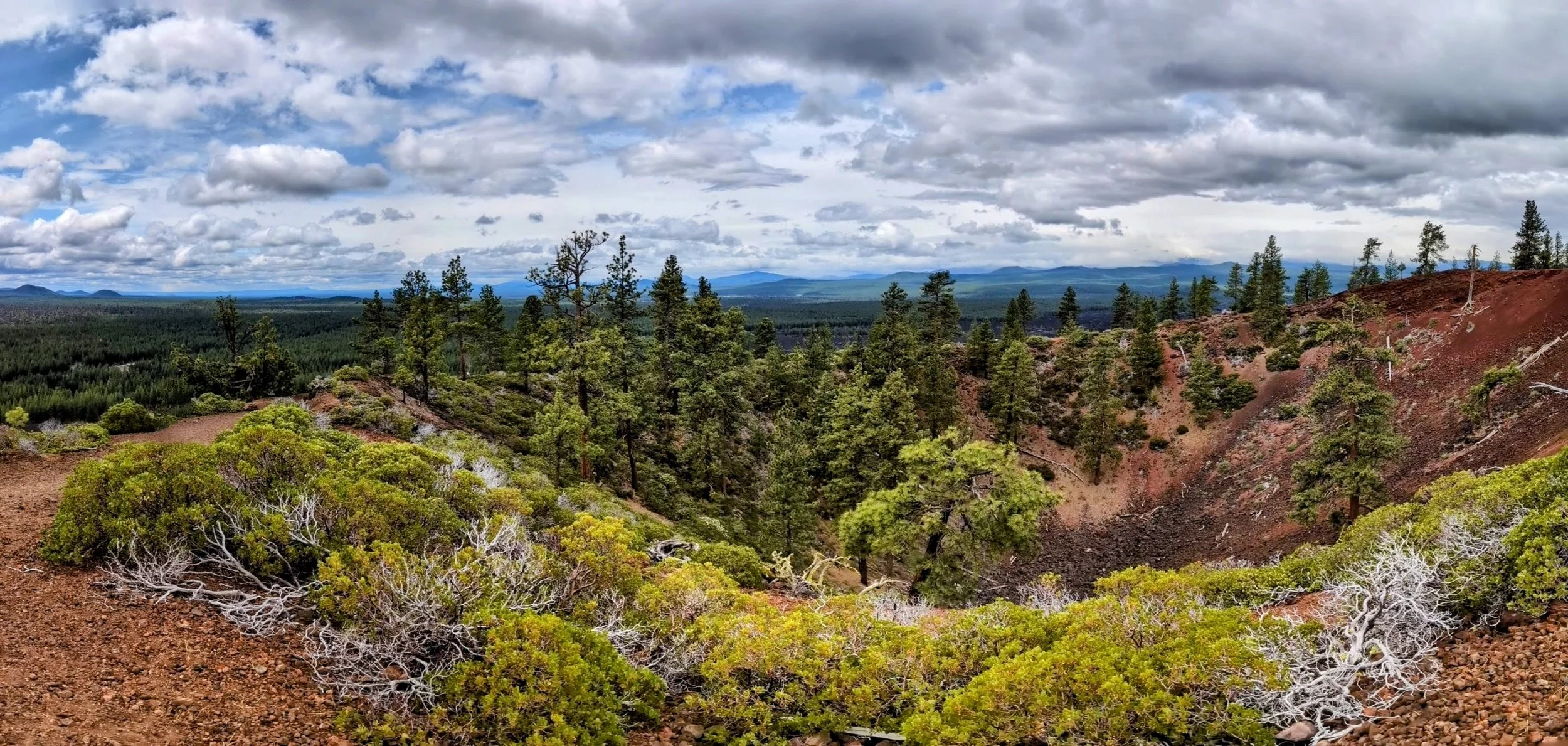
Directly ahead was the crater in the center of the cinder cone. To our left was a path leading up to the top of the cone where the lookout is perched. To the right, a trail that looped around the crater rim to the lookout above.
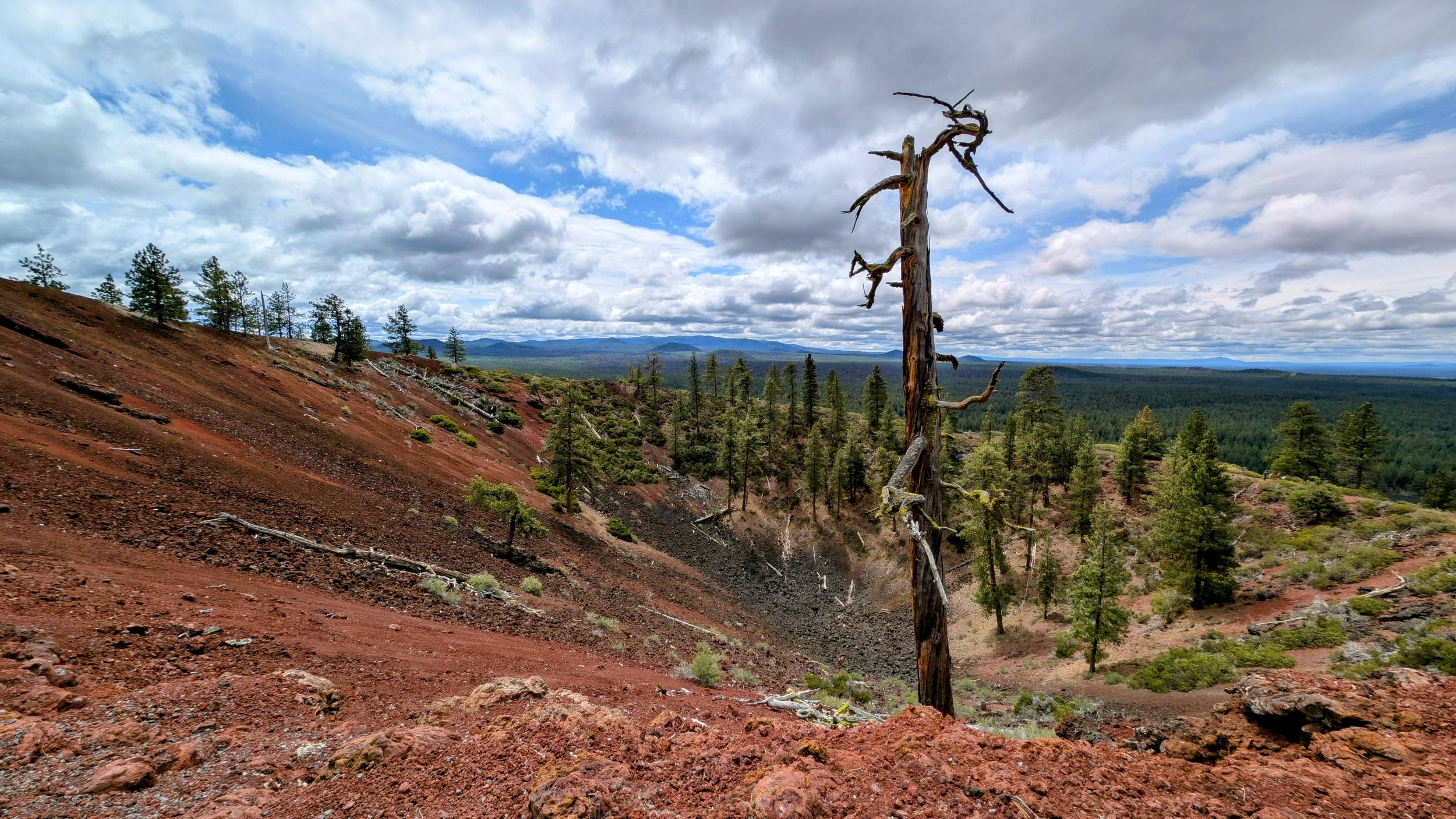
Approaching the crater, we peered into the 150 foot deep hole. It was a steep drop down into the center, surrounded by lava rock gravel and some vegetation. A lone, weathered tree stood upon the edge, standing watch over the crater.
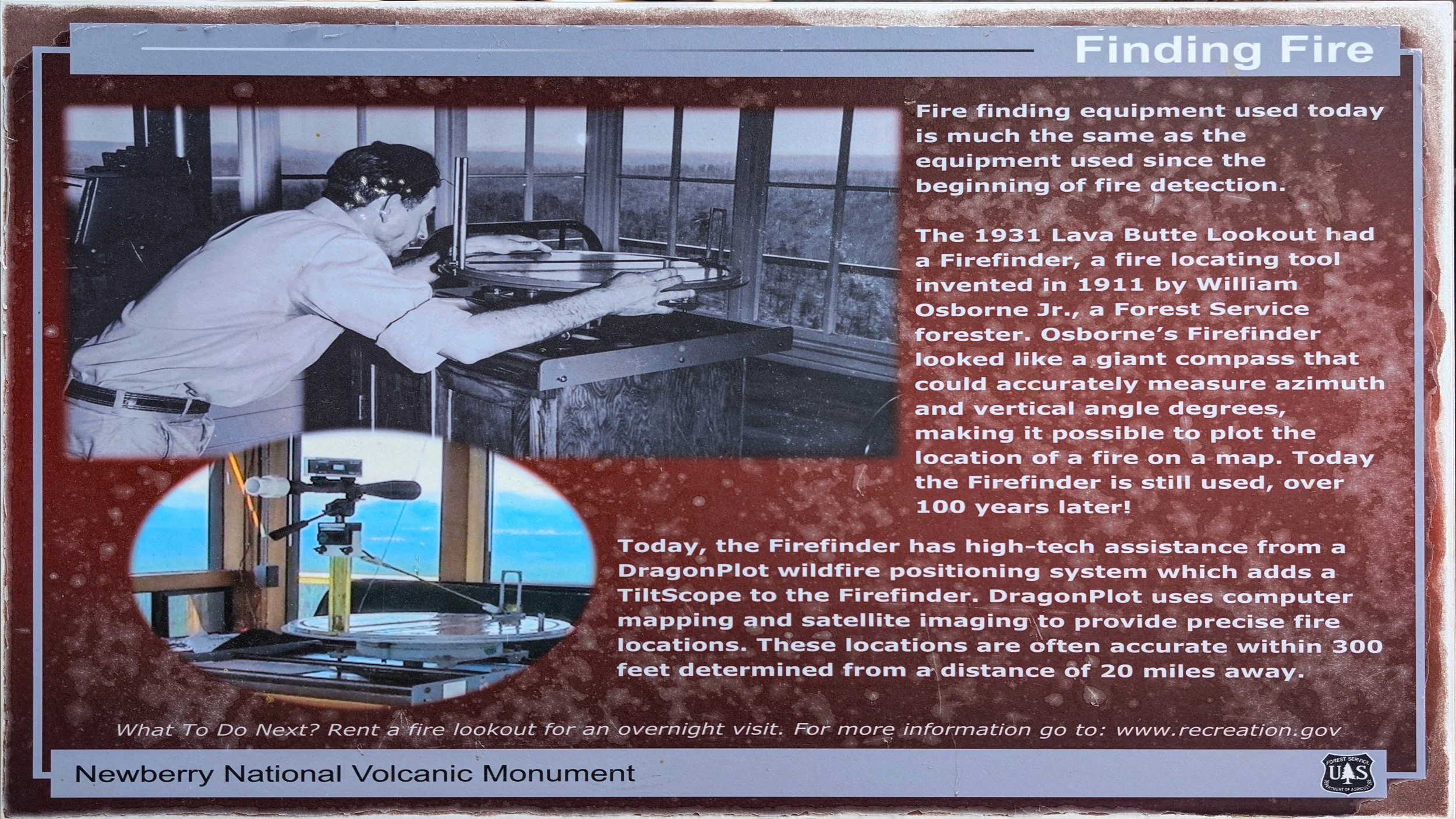
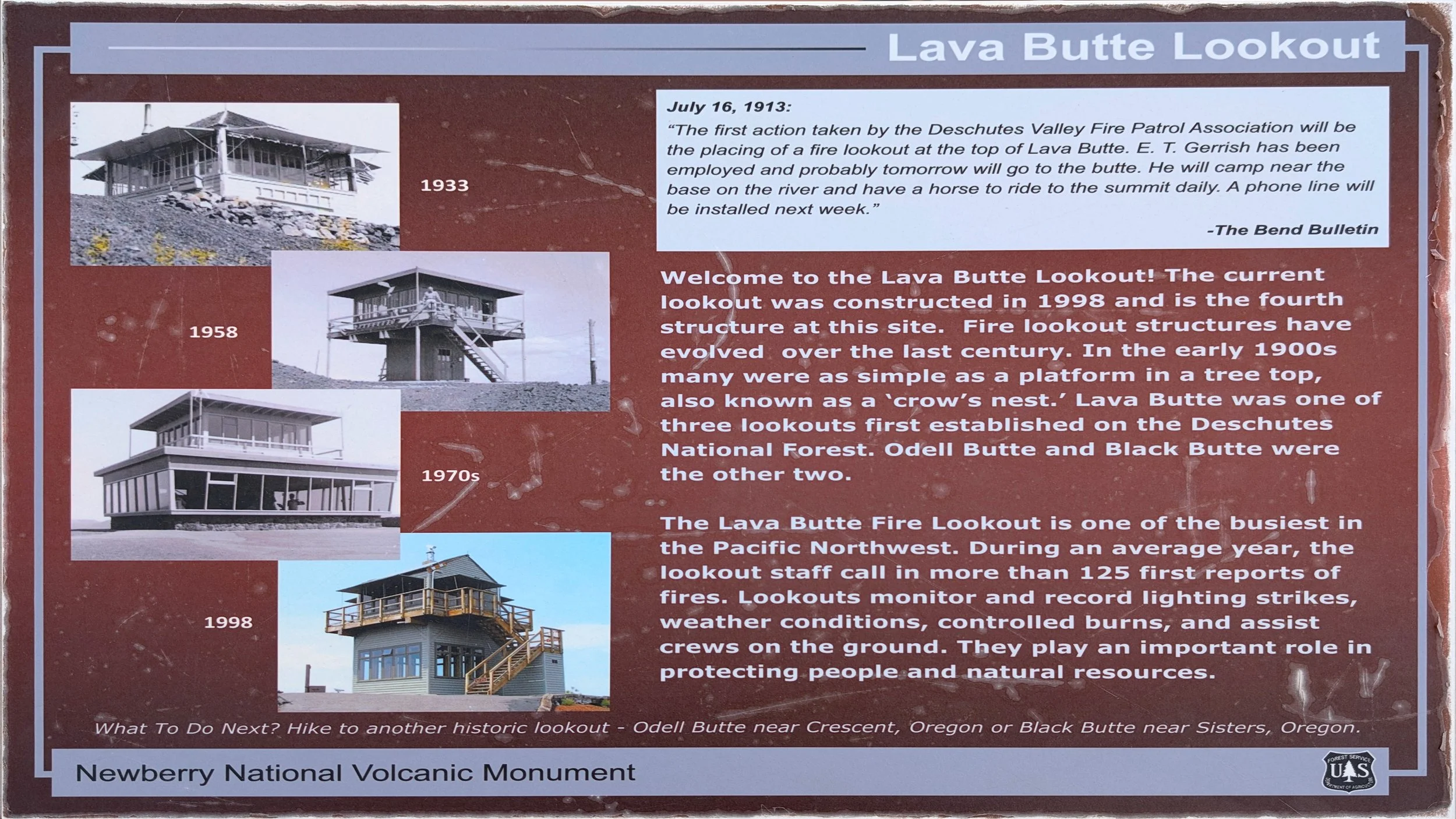
We soon moved on towards the watchtower, largely to try and keep warm. We climbed the short path to the watchtower and saw the other end of the rim trail. The current watchtower is the 4th version at this location. During an average year this lookout will call in more than 125 first reports of fires. Lookouts monitor lightning strikes, weather conditions, controlled burns, and assist fire crews on the ground.
We soon made our way to the trailhead east of the tower. Almost immediately we noticed the wind diminished to a gentle breeze. The repreave from the torrent was quite welcome. We walked slowly along the lava rock gravel path, taking in the views and enjoying the calm. From here we could see our future destination to the southeast, the Newberry Caldera.
Halfway around the rim and the wind starting picking up again. Looking west over the lava fields reminded us of Craters of the Moon in Idaho. Such a harsh landscape is difficult to describe. It certainly justifies the name given to that landscape in Idaho.
Returning to the parking lot we were once again berated by the chill wind. We didn’t have to wait long for the shuttle to return. Once it was emptied of passengers we boarded and breathed a sigh of relief to be out of the harsh wind. Descending to the visitor center, we reflected on the gorgeous views, exterme weather shifts, and dramatic history of this tumultuous area.
Summary
We only focused on the lookout, but would like to return to hike some of the trails and to see the waterfalls. The lookout is impressive. With incredible 360-degree views, it makes for a memorable place to visit. The wind at the lookout was intense, but hiking the trail gave us a reprieve for most of the visit. This is an area we would love to explore more, but we simply crammed too much stuff into the one day.
Surrounding Area
Petersen Rock Garden and Museum
Lava River Cave
High Desert Museum