Lava River Cave, Bend, Oregon
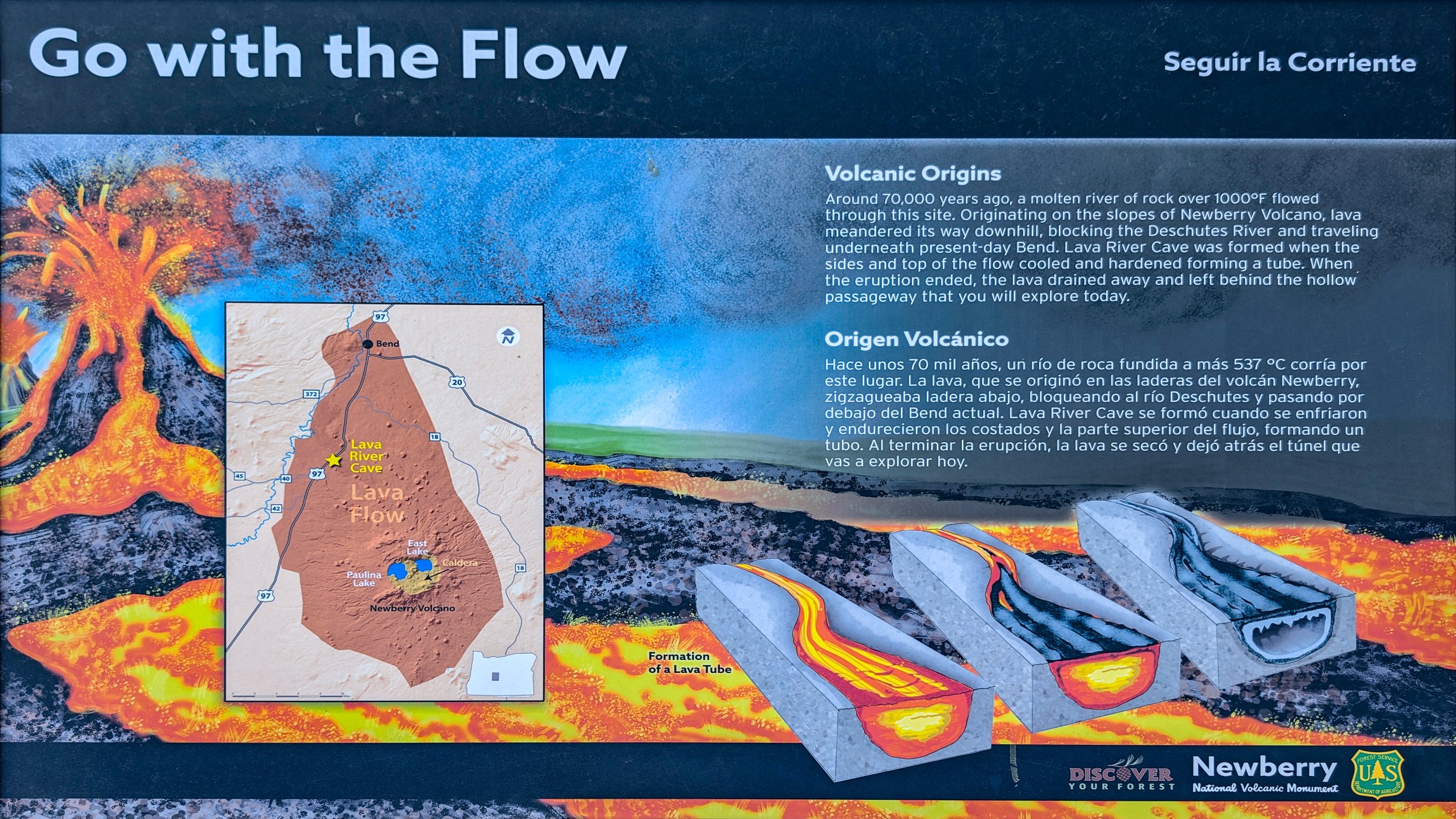
Beneath the sun-scorched high desert just south of Bend, Oregon, a different world waits in total darkness—one carved not by water, but by fire. Lava River Cave stretches more than a mile through a lava tube formed some 80,000 years ago when molten rock from a nearby cinder cone drained away and left behind a hollow, cathedral-like tunnel of basalt. Step inside and the temperature drops to a steady 42 degrees no matter the season above; the desert light fades to black within a few dozen yards, and the only sounds are your own footsteps echoing off rock that's been waiting patiently since long before any trail led here. Whether you're chasing an underground adventure, an escape from summer heat, or just a genuinely strange corner of Oregon's volcanic history, this cave beneath Bend delivers all three.
Hours of Operation
Open mid-May through mid-September only. It's closed the rest of the year to protect bat habitat (and to prevent the spread of White-nose syndrome).
In May: timed entry reservations run from 10:00 AM to 2:00 PM.
June through September: 9:00 AM to 3:00 PM.
Last ticket entry is at 2 PM, with the cave closing at 4 PM daily.
The cave is CLOSED Tuesday, Wednesday, and Thursday.
One ticket per vehicle, NOT per person.
Admission
$2.00 per ticket (ticket is for the vehicle, not the occupants), nonrefundable (Reservations)
Northwest Forest Pass: $30 annual pass or $5 for Day Pass (https://www.fs.usda.gov/r06/passes)
Notes
Ticket Duration
This timed reservation provides for parking one vehicle for up to 2 hours from your selected arrival time. Depart the parking lot no later than 2 hours after the scheduled arrival time. Tickets are only valid for the day and time listed on the ticket.
Last Entry Ticket Times
Please arrive no later than 30 minutes after your tour start time. The gates to the parking lot will close 30 minutes after the last tour at 2:30. No entry will be allowed after this time.
Print or Digital Copy of Ticket
Please have a printed or digital copy of your ticket available to be checked at the site.
Valid Recreation Pass Required
In addition to a timed reservation ticket, a valid recreation pass is required at the cave. A Northwest Forest Pass annual, day pass, or America the Beautiful Interagency Pass is required at Lava River Cave. Passes are sold onsite. This day pass requirement is in addition to the $2 ticket reservation fee. For more information on valid passes, visit: https://www.fs.usda.gov/r06/passes.
Equipment
Comfortable closed-toed shoes or boots
Dress for the outside weather but bring clothes for the inside temperature. It is a constant 42° F (5° C) inside the cave.
Bring or rent two light sources. This is the safest way to experience and enjoy the cave. One light source should be 1,000 lumens minimum; typically, the large spotlight flashlights that have a trigger handle are recommended. The secondary light can be a smaller flashlight or headlamp for navigation.
$7 per light if you rent at the cave. These lights are the large spotlight flashlight type.
Important Notes
Drones are NOT allowed at this location.
Pets are NOT permitted inside the cave. We scheduled all “Dog Free” activities for one day and dropped Asa off at a doggie day care at Must Love Paws.
Timing: The cave is more than 2 miles long, round trip, and takes about 1.5 hours to complete.
Accessibility: The cave has 55 steps and uneven terrain throughout. It is NOT accessible for anyone with mobility issues.
Disease: In the interest of preventing the spread of White-nose syndrome to bats that reside in the Cave, do not wear or bring into the cave any clothing or gear you have used in any other cave or mine.
Approach
From Bend, Oregon: Follow US-97 south for about 11 miles. Slight right onto Crawford Rd/NF-9702. Then an almost immediate left onto Cottonwood Rd. In a little more than 1 mile, turn right into the parking lot. (43.895480, -121.369756)
Life Without
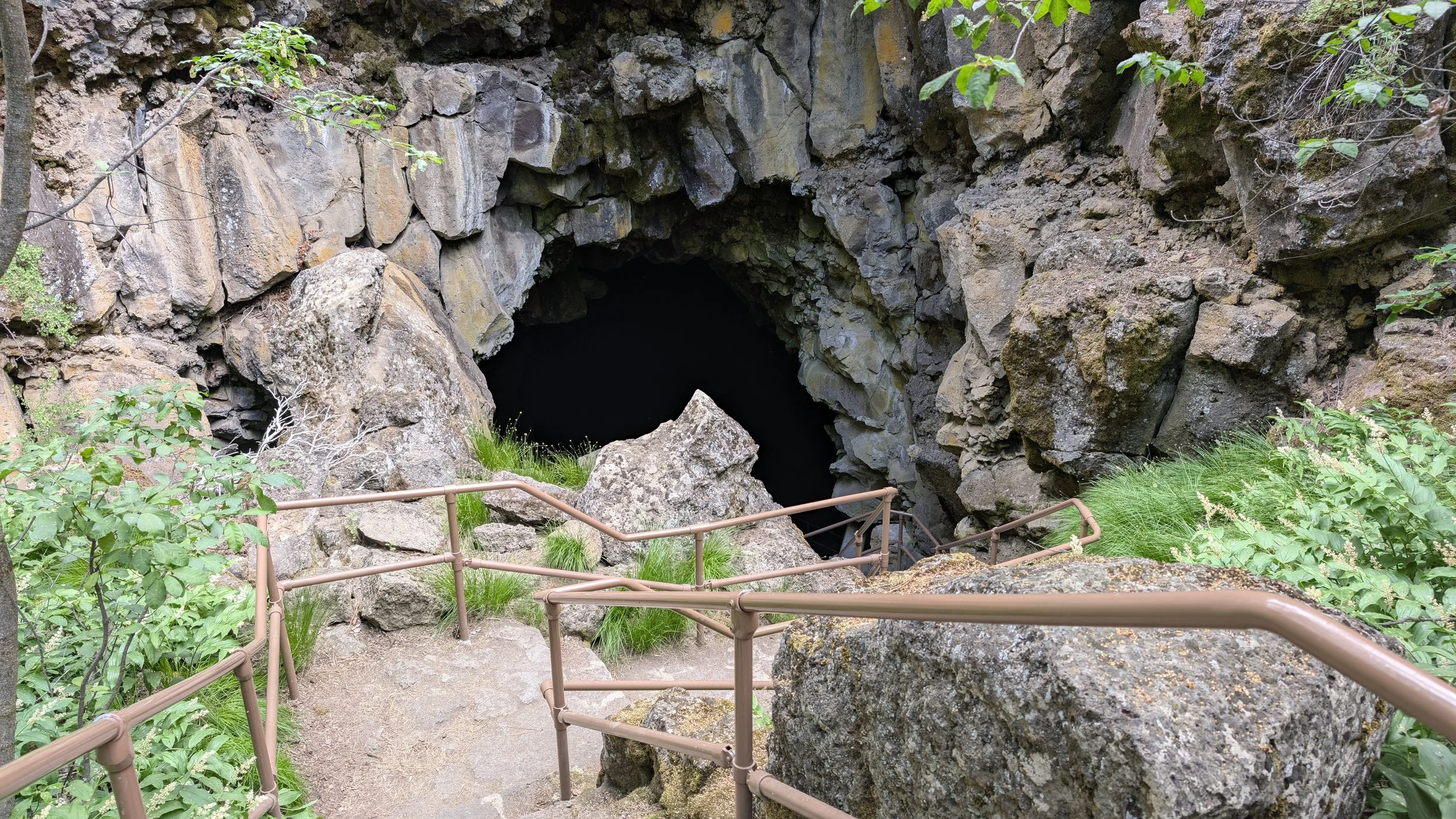
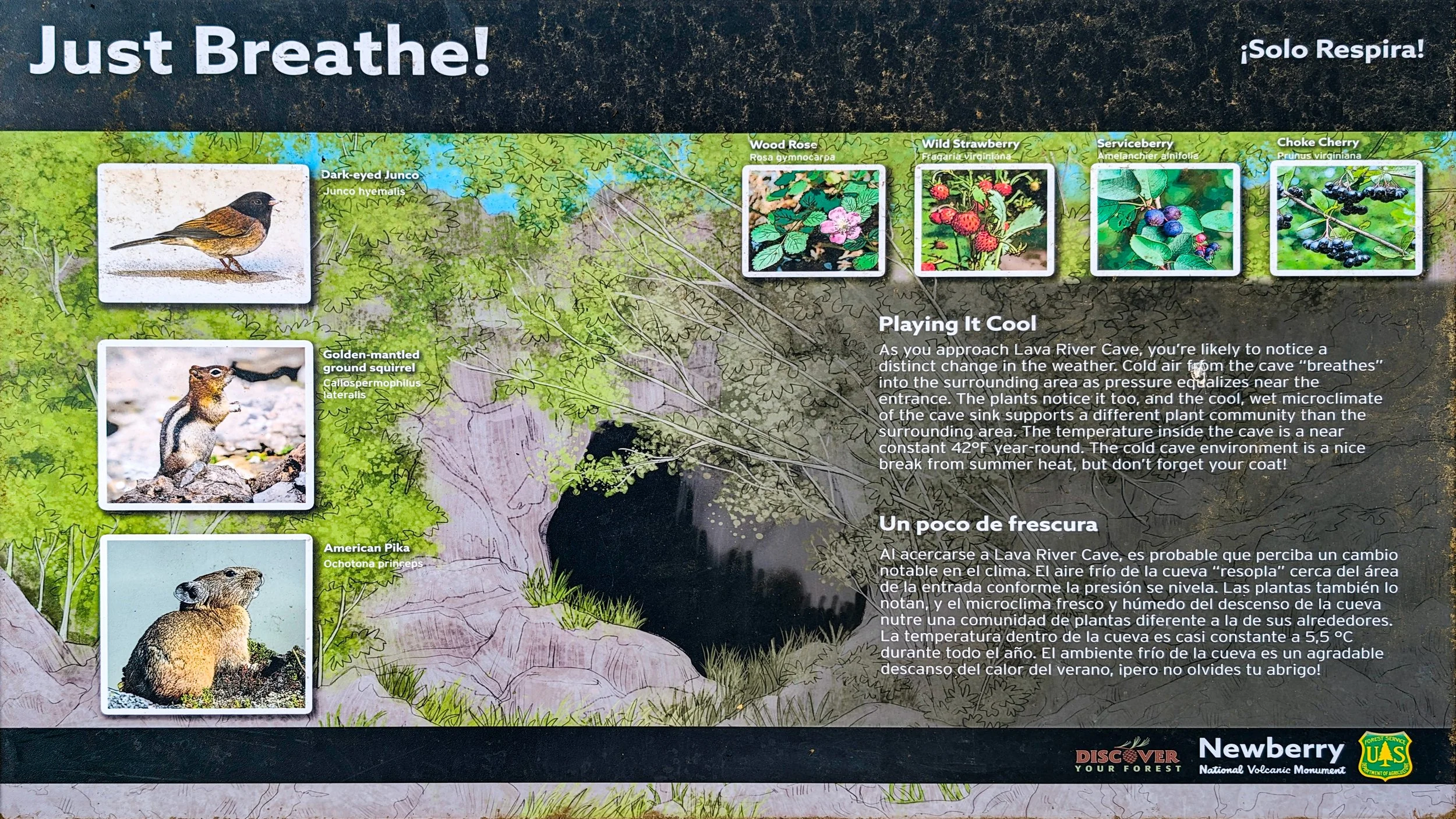
The exterior of the cave has its own microclimate. The cold 42° F (5° C) air exiting the cave cools and breathes life into the area that could not normally exist otherwise. Insects, birds, mammals, and a variety of vegetation can thrive in this climate. Only meters away, the high desert of central Oregon restricts or prevents such life from existing.
Before you begin the trail to the cave, take a little time to examine the plants around you. Compare these plants to the plants you see as you near the cave’s entrance. You will quickly see the difference this microclimate creates.
Pause at the cave’s entrance and close your eyes. Feel the cool air drape over you and take a deep breath through the nose. Smell the dampness in the air? It’s time to delve into the darkness.
Life Within
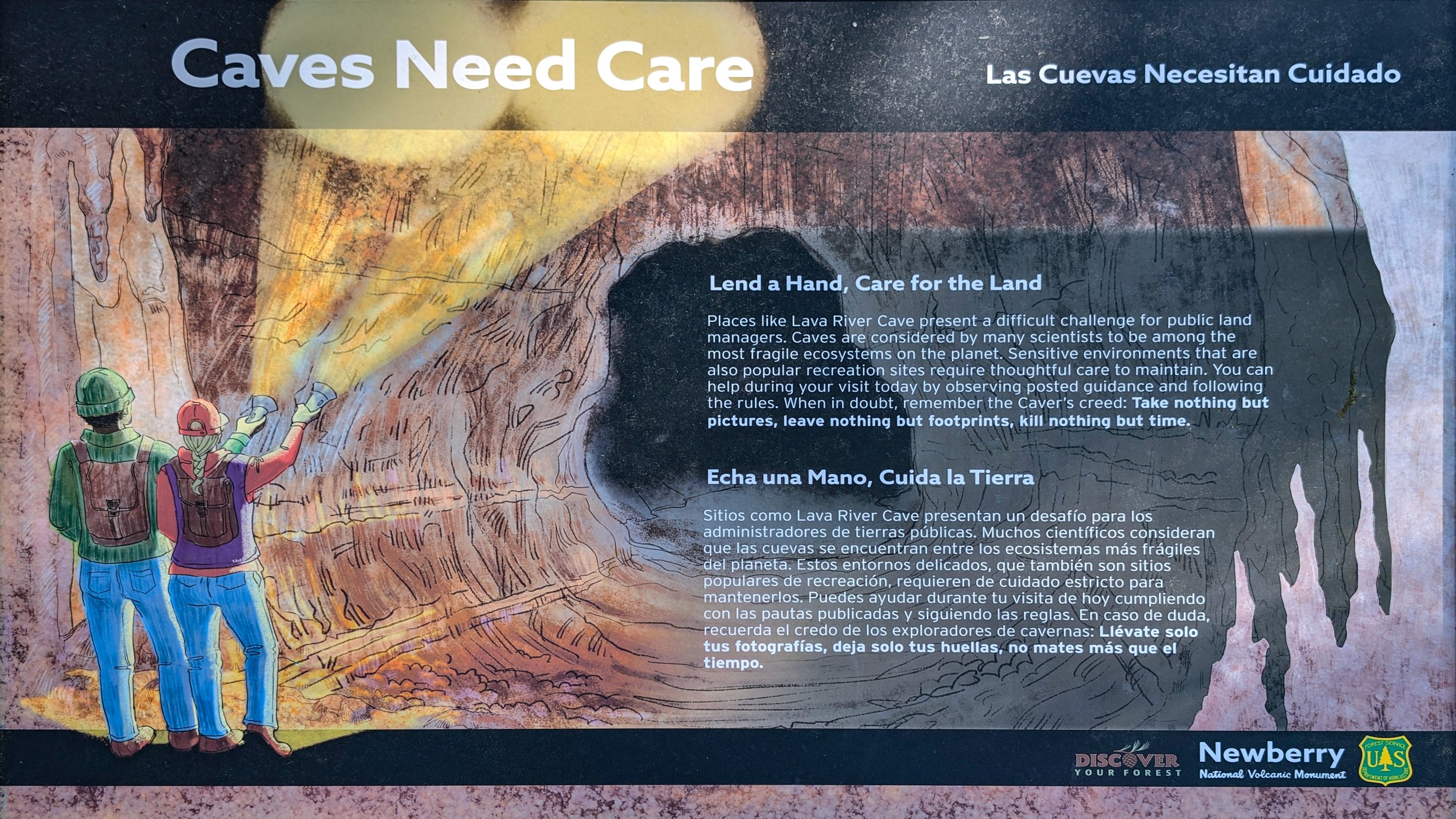
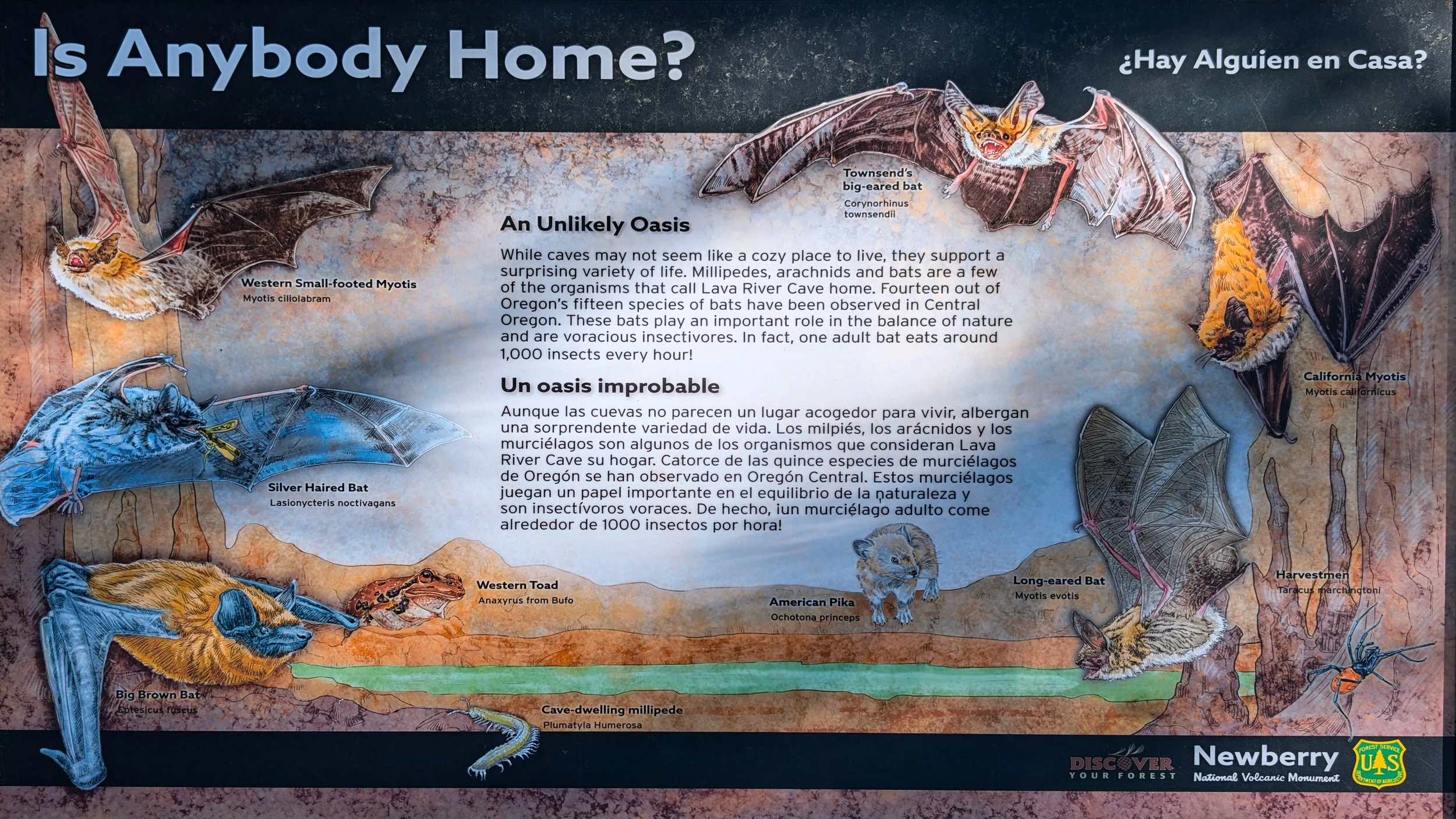
Within the cave, the light dwindles quickly with every step. Soon you are shrouded in darkness. While seemingly an inhospitable environment for us humans, caves are an ideal home for a multitude of arachnids, millipedes, and bats. While bats have natural predators, their biggest threat is disease. White-nose Syndrome is spreading across North America, but you can help slow the spread.
By not bringing or wearing any items or clothing, including footwear, into a cave that has been in another cave, contamination is prevented. This is why Lava River Cave requests that you do not wear any potentially contaminated clothing into the cave.
White-Nose Syndrome in Bats
Cause: Fungal disease caused by Pseudogymnoascus destructans (Pd), a cold-loving fungus likely introduced from Europe/Asia around 2006, probably via contaminated caving gear.
Where it strikes: Grows in cold, humid hibernation sites (caves, mines), infecting bats' muzzles (giving the "white nose" look), wings, and ears.
How it kills: Irritates bats and disrupts hibernation, causing frequent waking; each arousal burns critical fat reserves, leading to starvation or bats flying out in winter to freeze/starve searching for food.
Impact: Some species (e.g., little brown bat) have seen 90-100% population declines in hardest-hit areas; several species are now threatened/endangered.
Spread: Now across most of the eastern/central U.S. and parts of Canada, continuing to expand westward.
Broader consequences: Bats control agricultural pests; their decline has ripple effects on ecosystems and crop protection (worth billions annually).
Prevention: No cure exists; management relies on decontamination protocols — avoiding gear/clothing used in other caves or mines, since spores can hitch a ride even when not visibly dirty.
Geologic Wonders
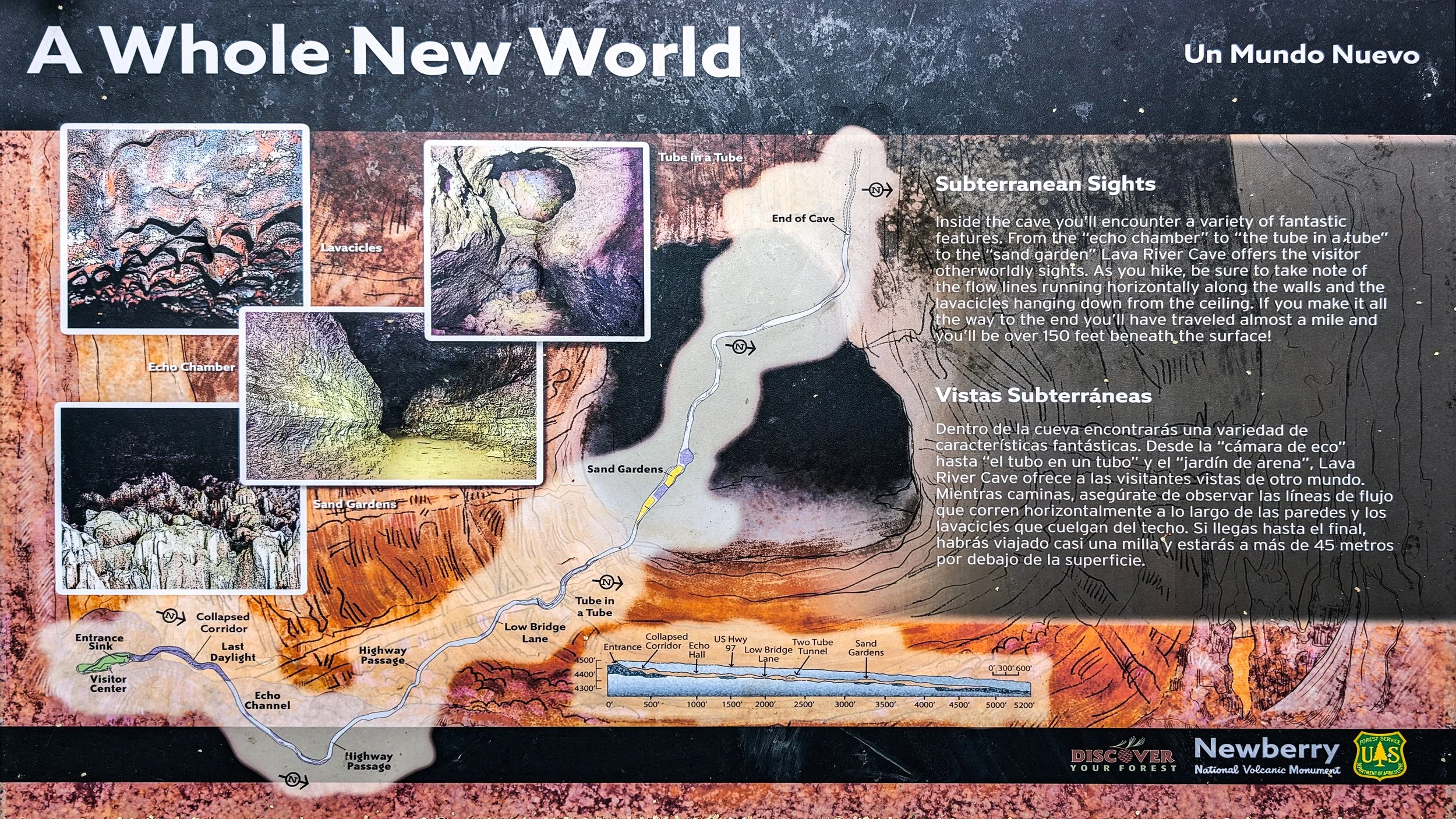
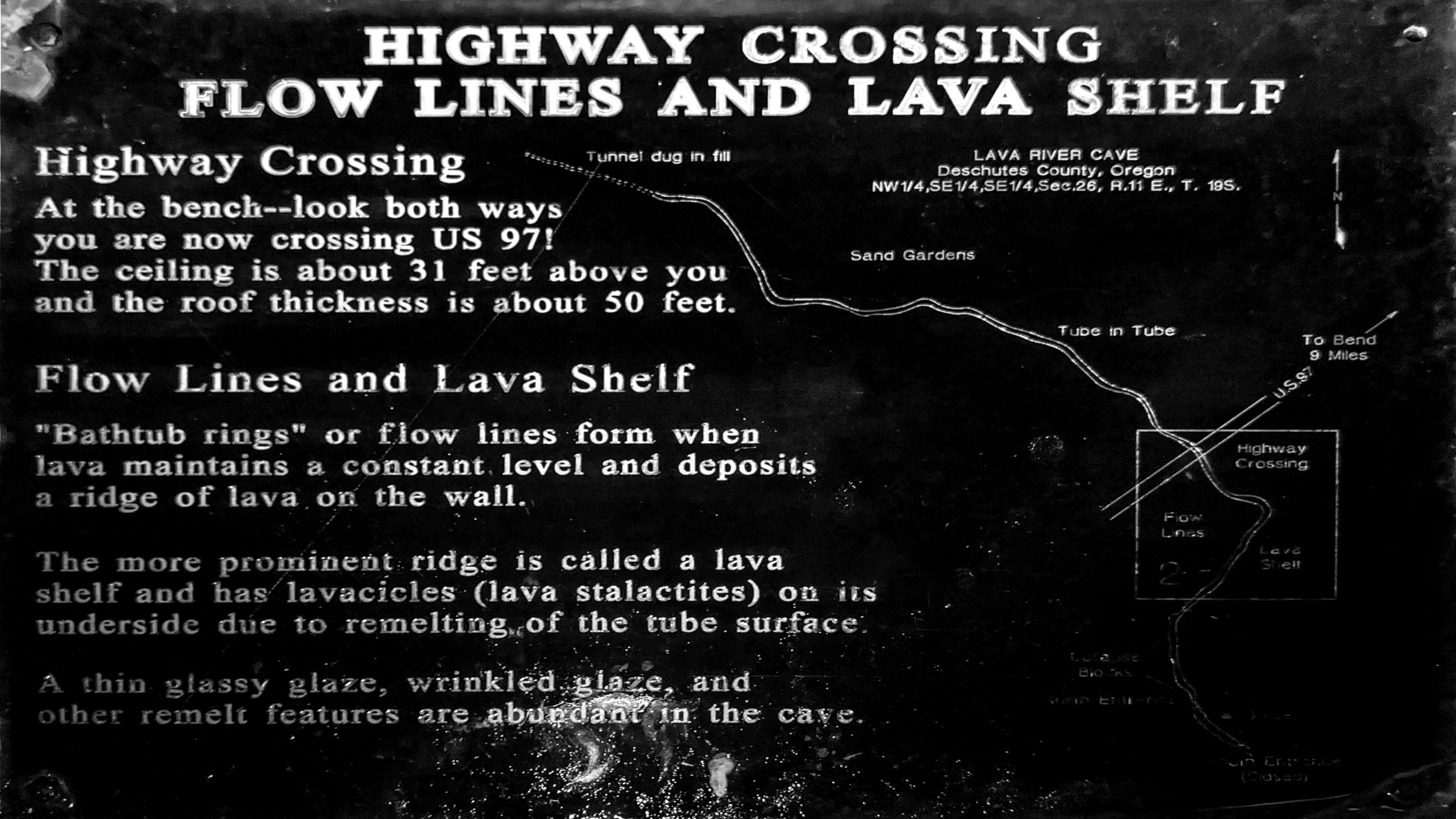
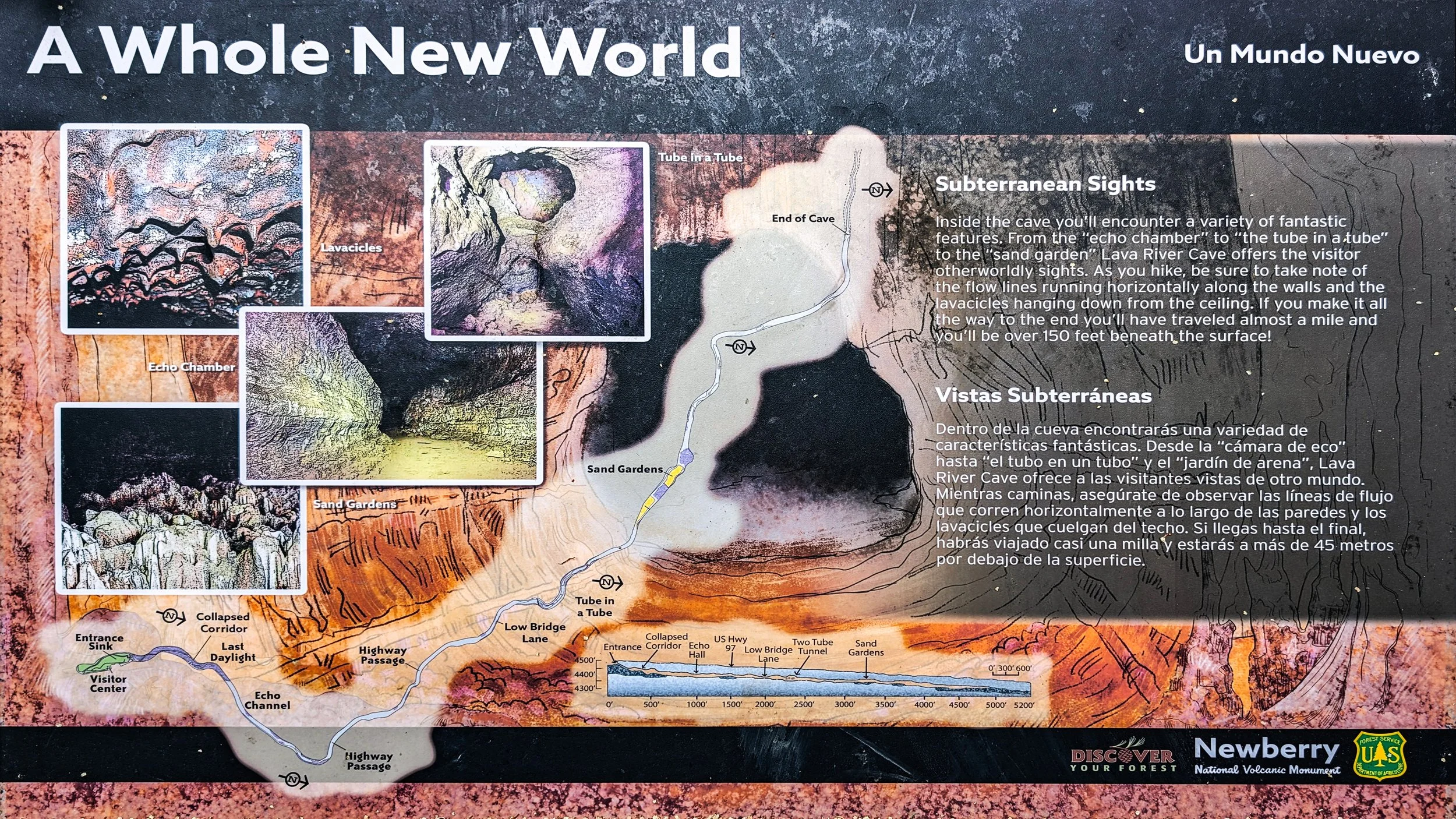
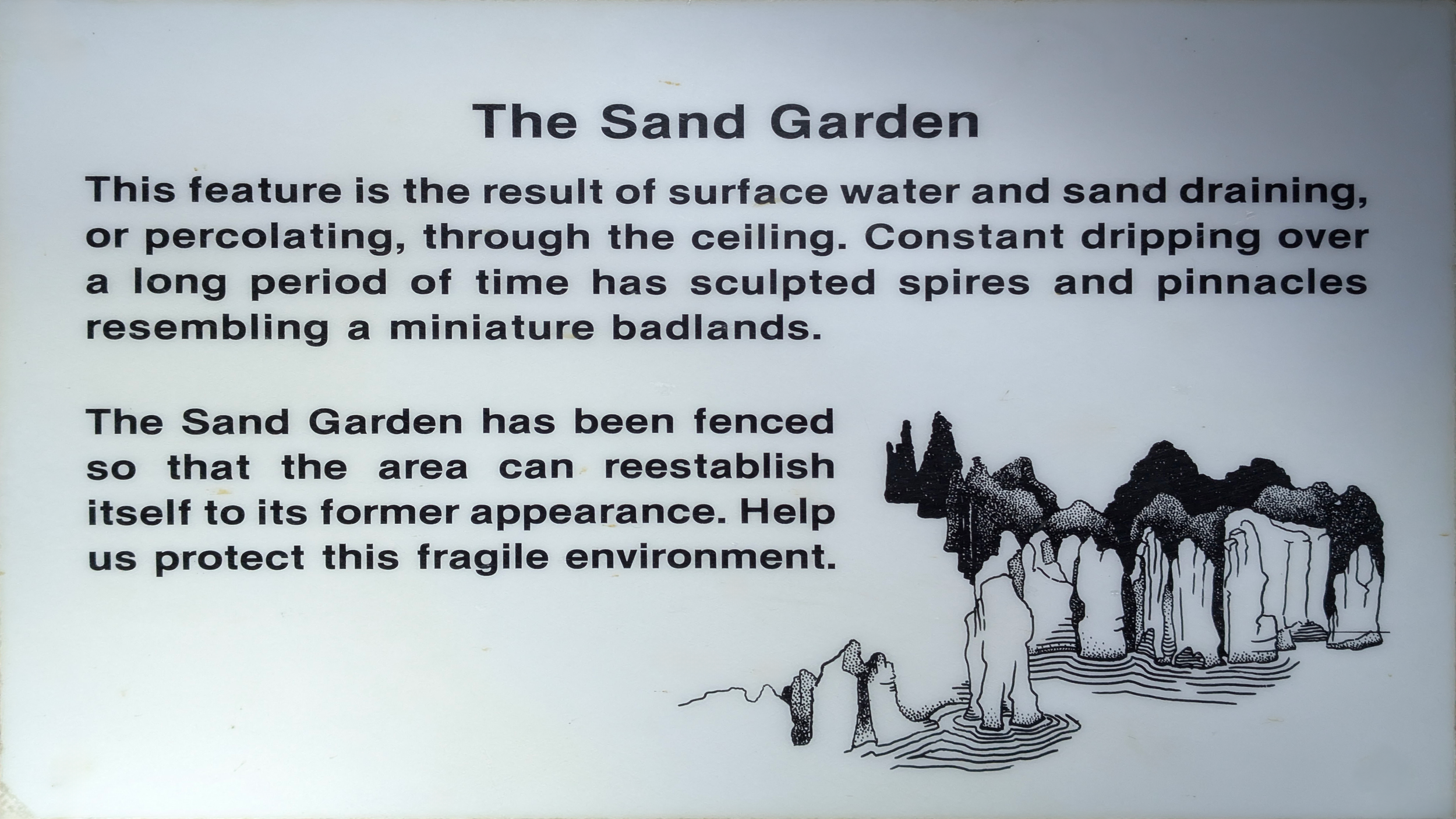
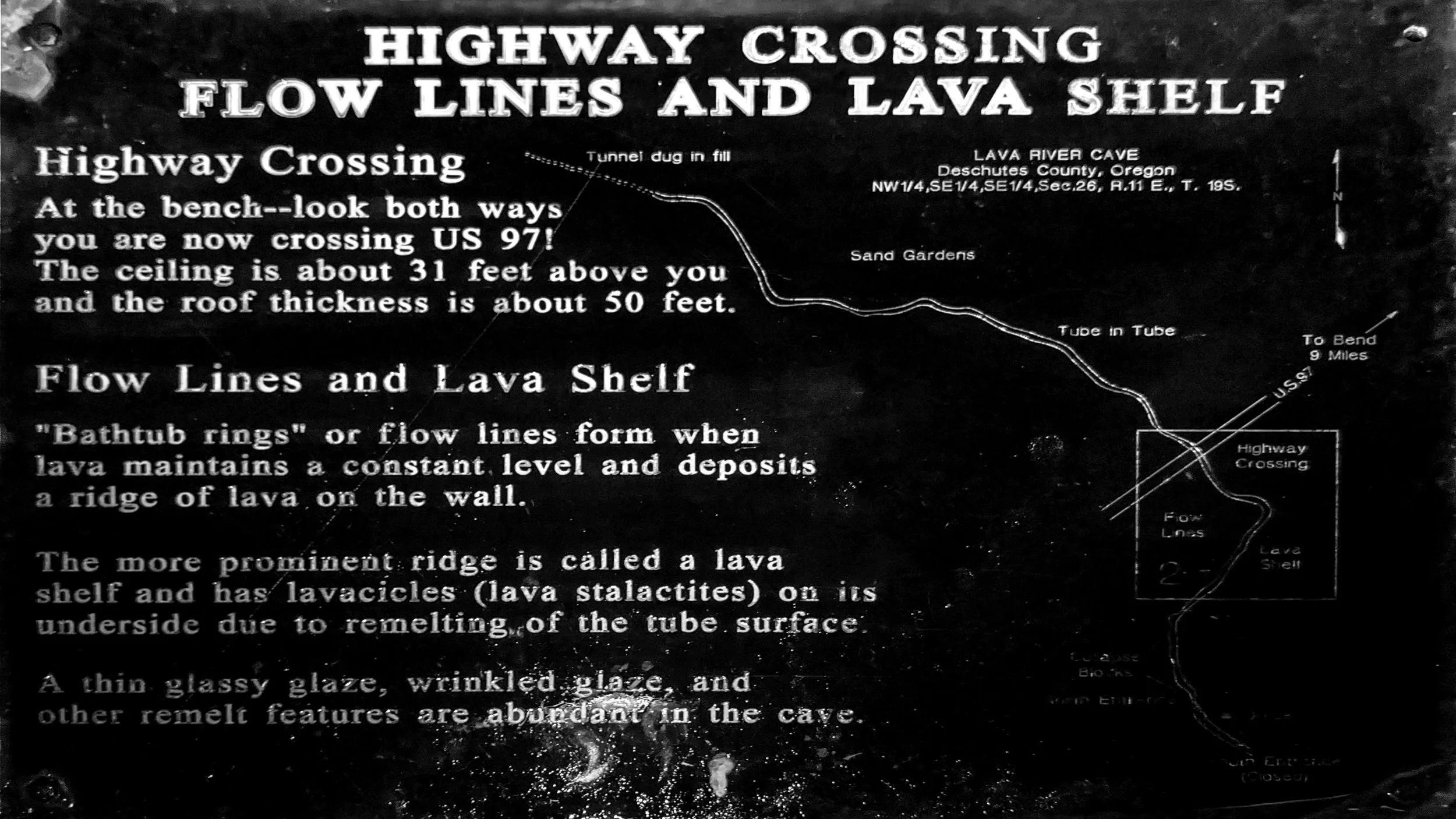
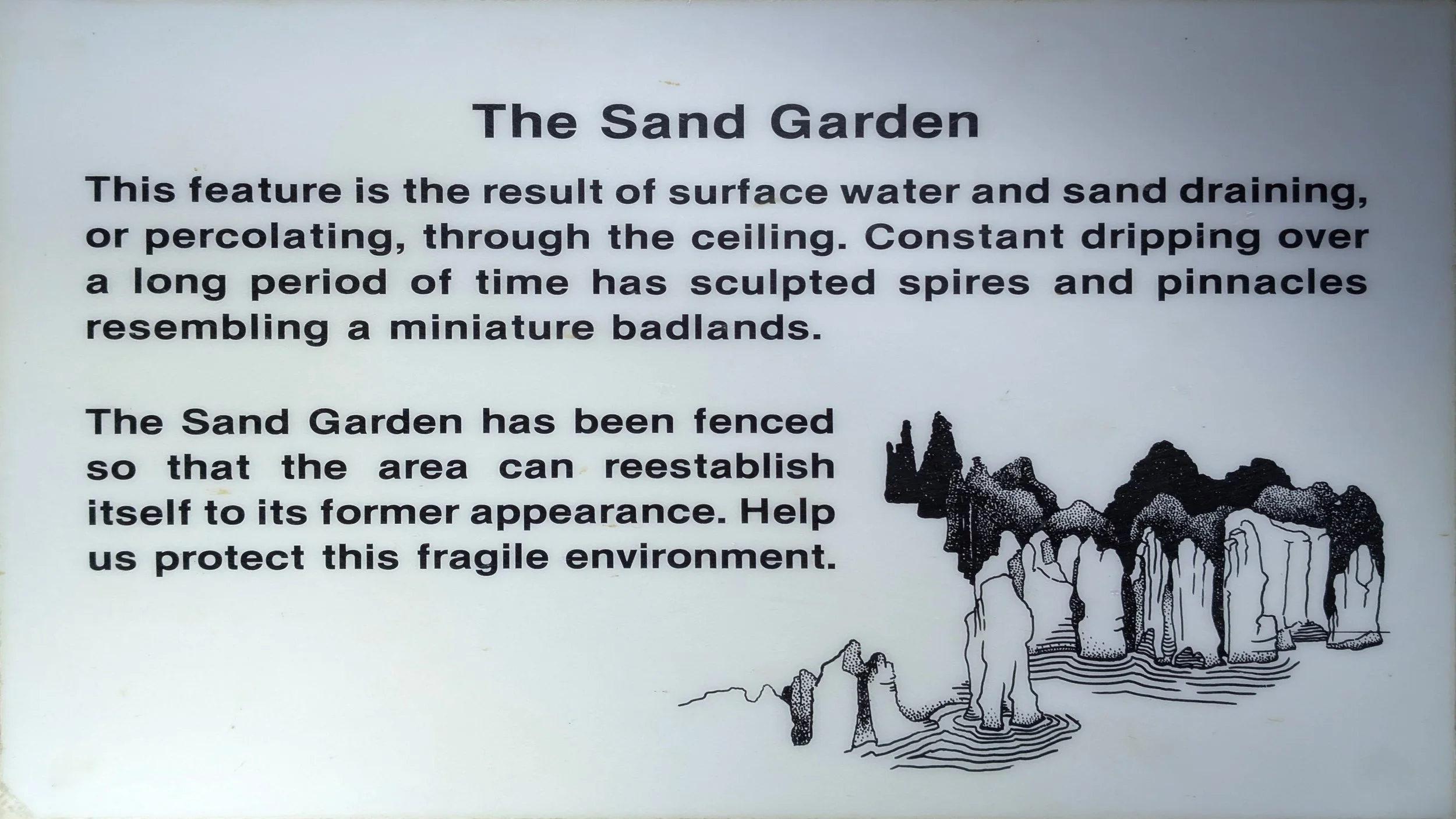
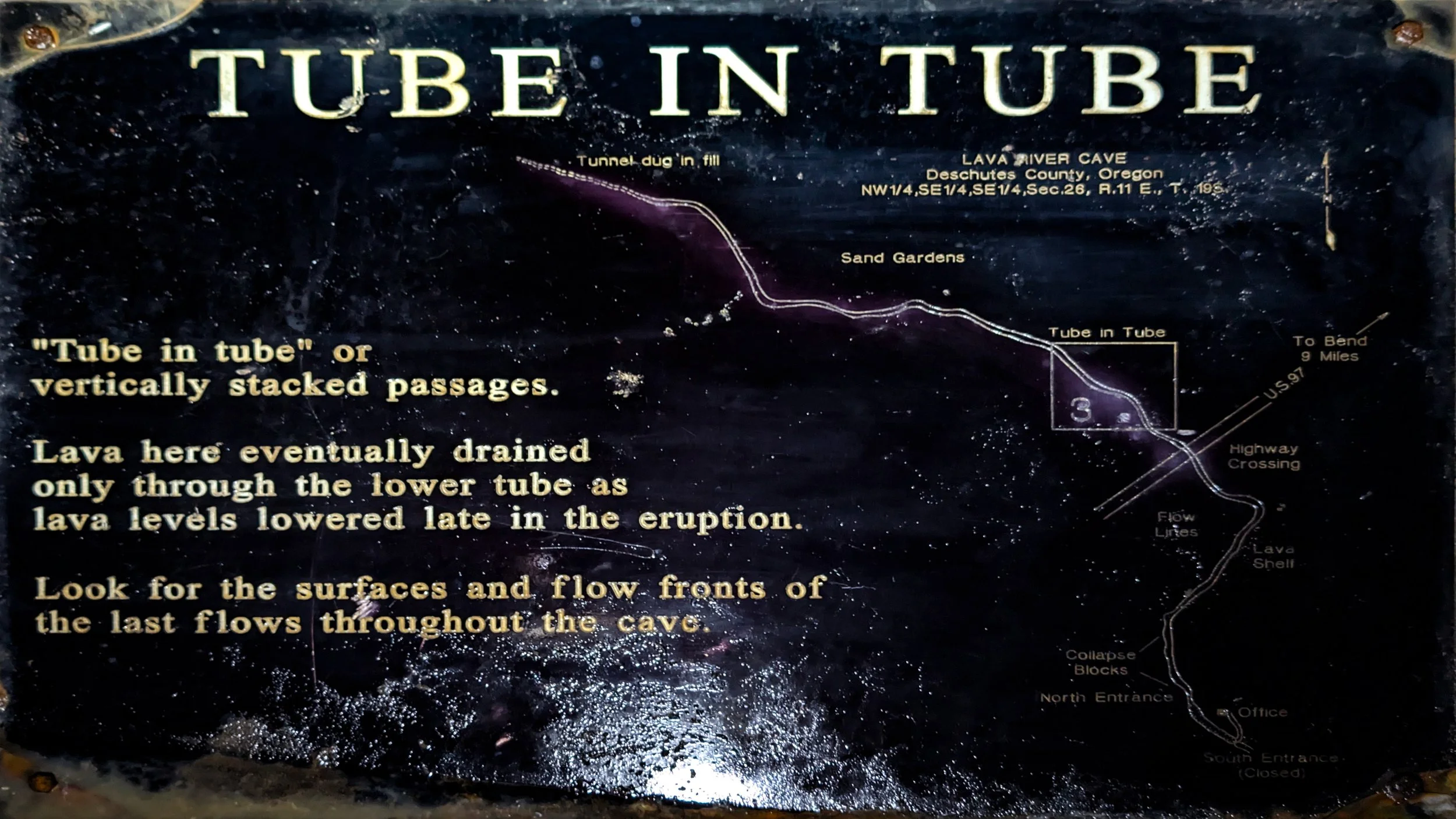
Inside the cave, you will see a variety of geological oddities. “Tube in a Tube” and Sand Gardens are two of the unique features you’ll encounter that are accompanied by informational signs. Other wonders await with less fanfare.
Observe how echoes and voices shift and change throughout the cave. Watch for variations in flow lines running horizontally along the walls. Keep an eye out for lavacicles dangling from the ceilings. Note the pockmarks in the floors from decades of constant water erosion caused by the constant drip, drip, drip of water falling from the ceiling. Watch for the sparkle of crystal fragments in the rocks, as well as a variety of colors introduced from sediment flow, lichen, and more.
If you hike all the way to the end of the cave, you will have traveled more than 1 mile and are more than150 feet beneath the surface.
*Keep a keen eye peeled for the ever-elusive bats. We were unable to see any, but they are very small and typically reside within fissures in the walls and ceilings.
Summary
During the hot summer months, this cave is a welcome reprieve from the heat of central Oregon. It is also fascinating to see the various formations caused by such a powerful event as a lava flow. I highly recommend visiting this literally cool, awesome natural attraction. We really enjoyed it.
Surrounding Area
Petersen Rock Garden and Museum
Lava Butte Lookout
Newberry National Volcanic Monument
High Desert Museum