Sumpter Gold Dredge - Sumpter, Oregon
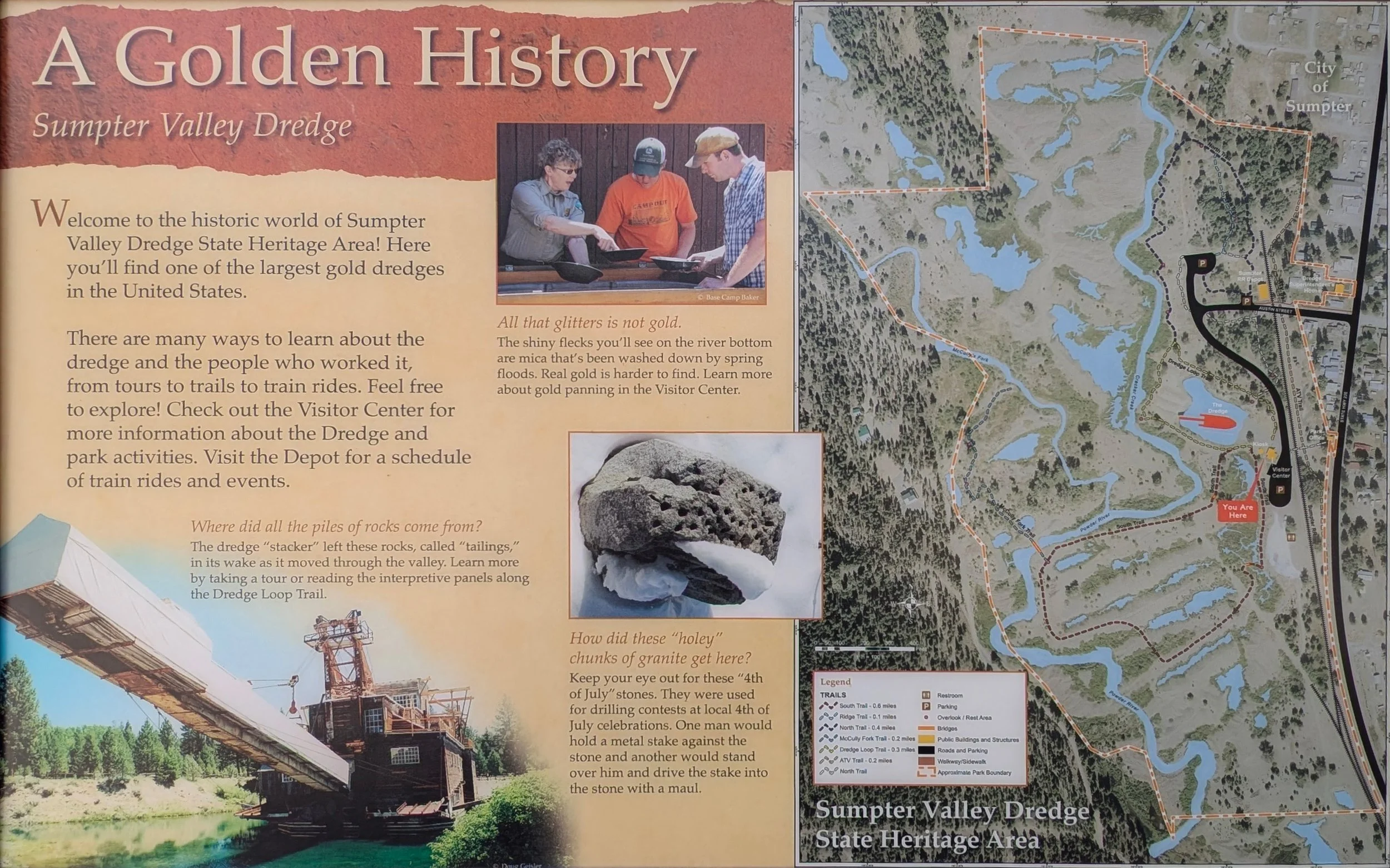
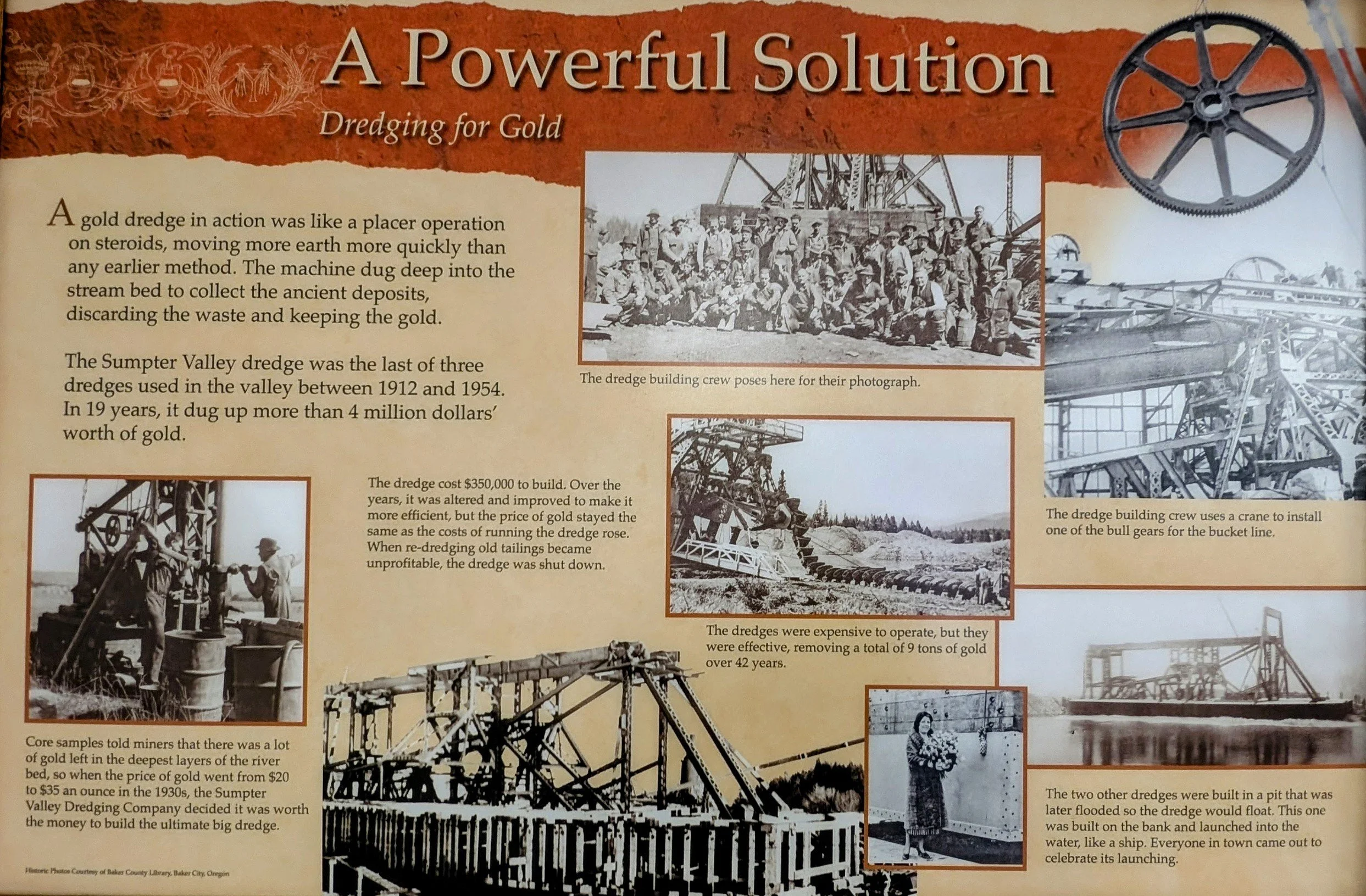
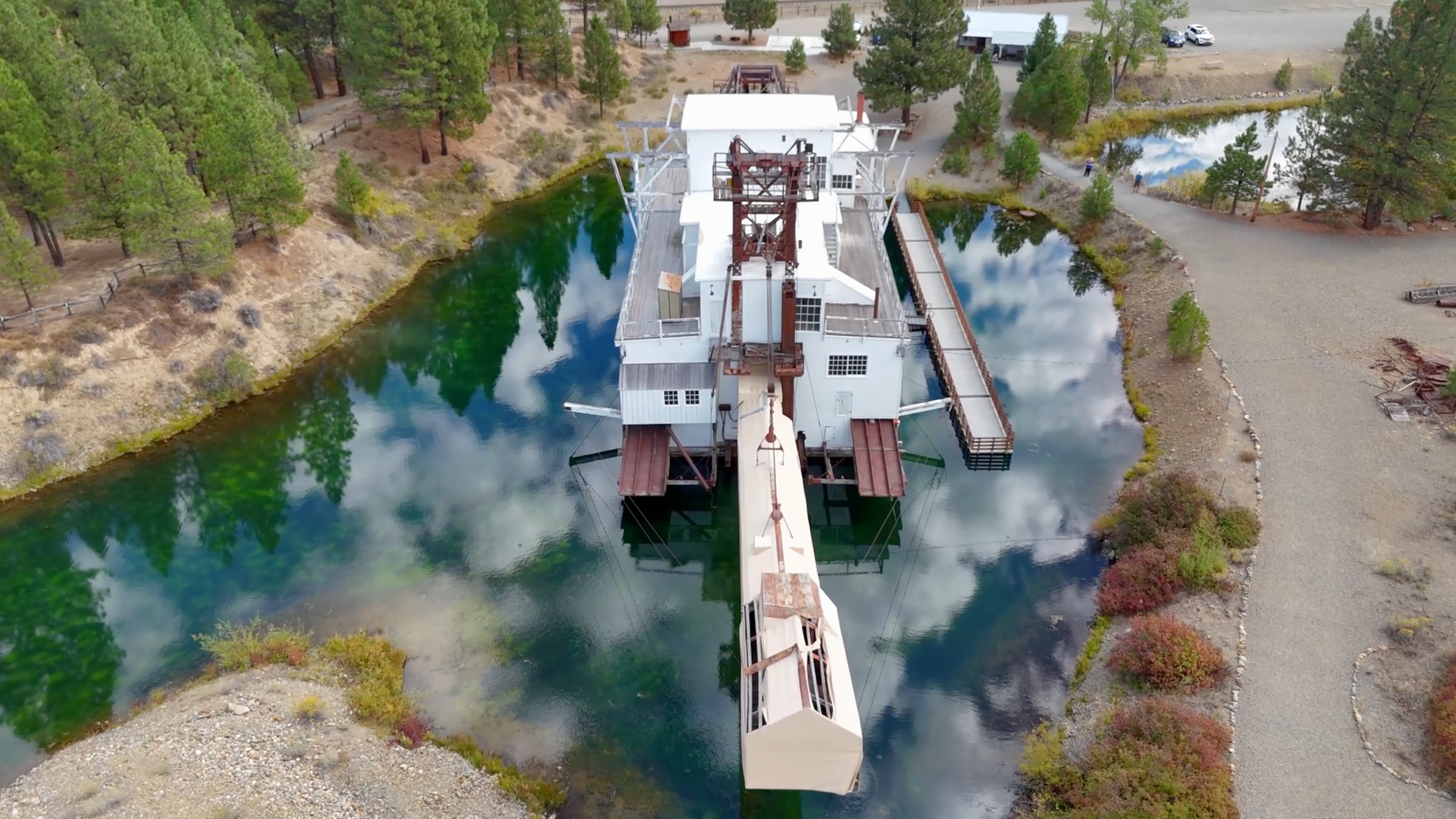
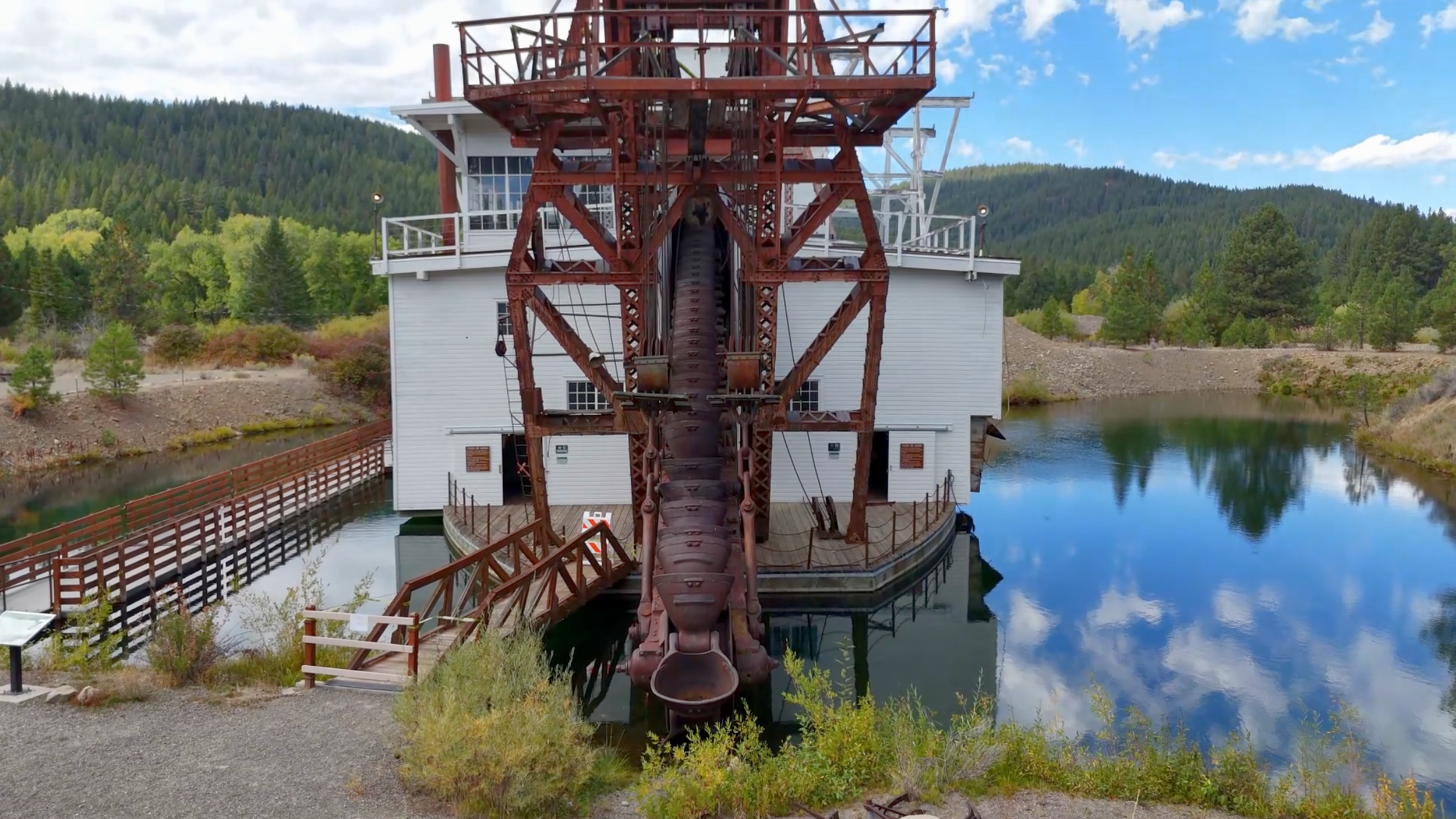
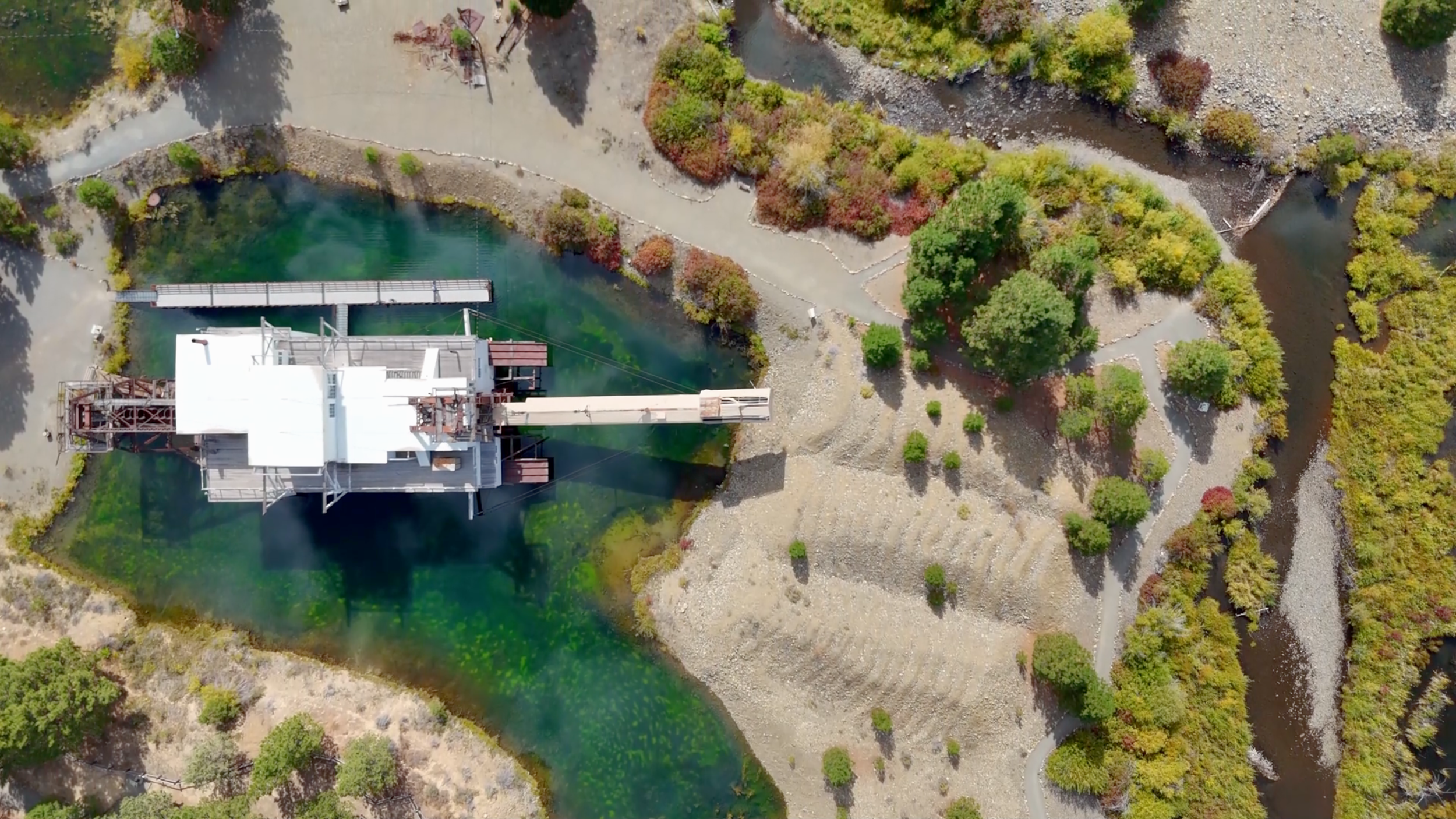
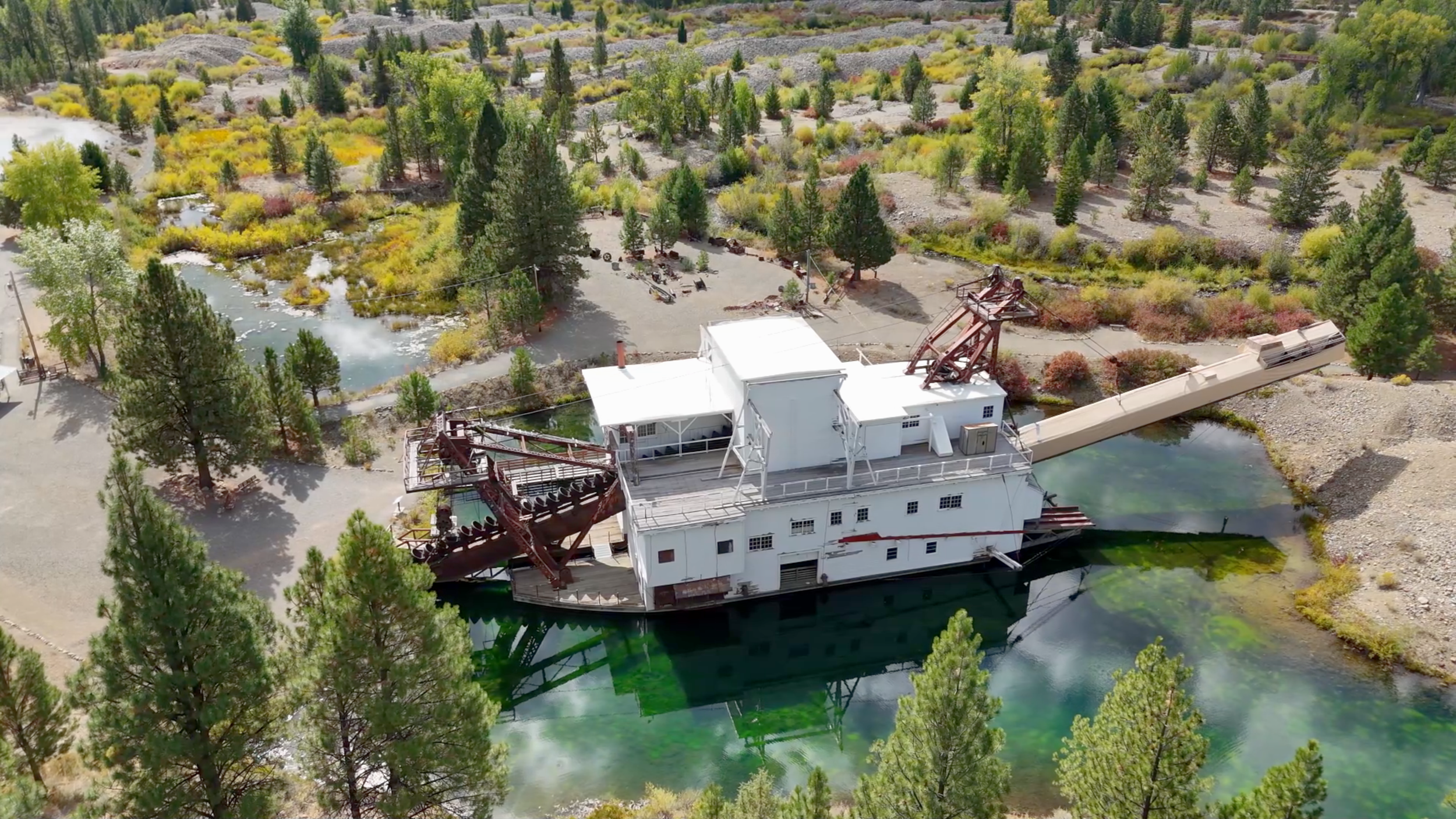
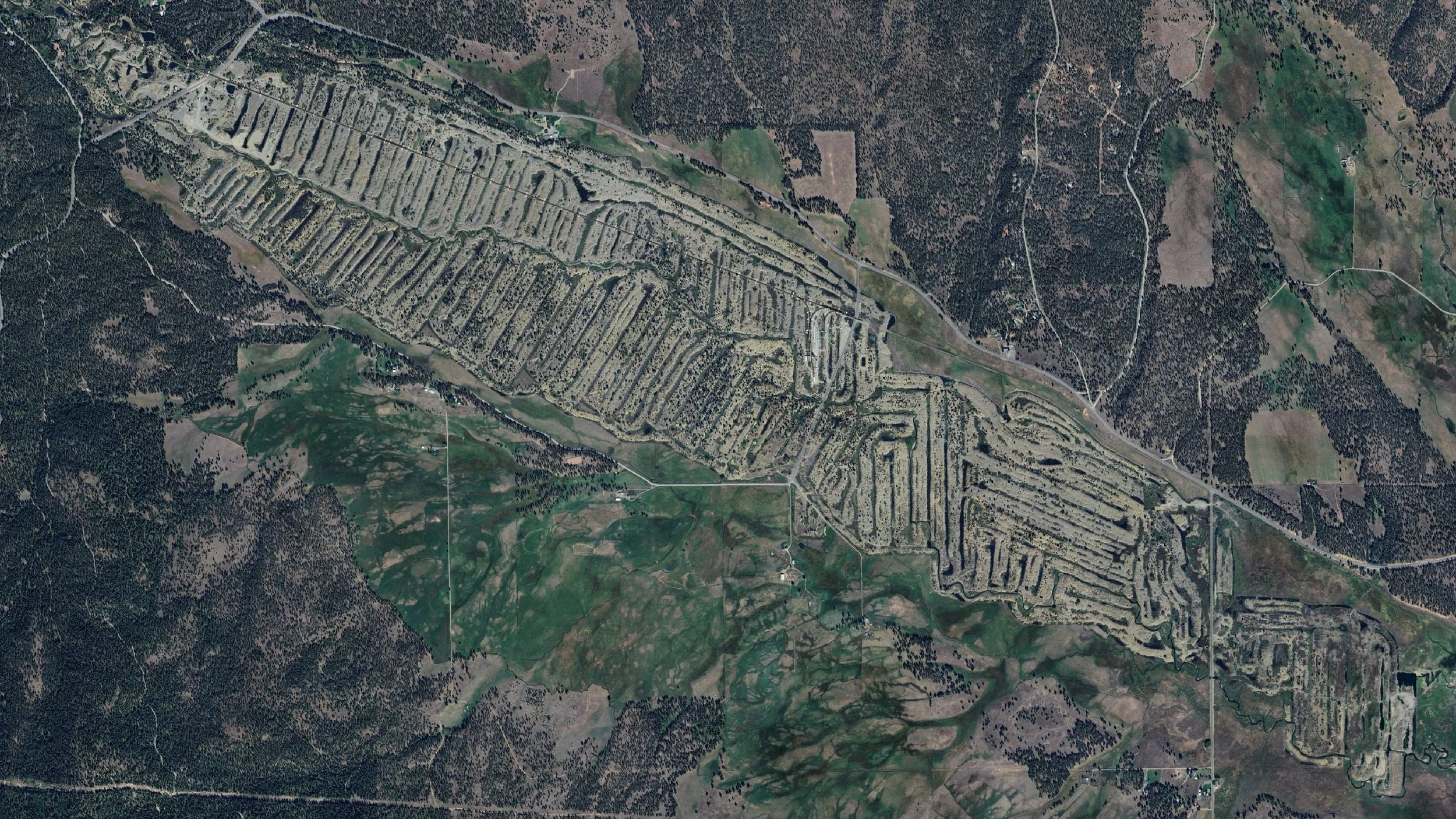
The Sumpter Gold Dredge (specifically Sumpter No. 3) is a massive, floating Yuba-style placer mining machine that now serves as the centerpiece of the Sumpter Valley Dredge State Heritage Area in Eastern Oregon. Operating almost continuously from 1935 to 1954, this 1,250-ton behemoth extracted gold by scooping up earth with 72 one-ton buckets, processing the material inside its 125-foot hull, and recovering gold flakes before expelling the waste. Although the dredge recovered approximately $4.5 million in gold, the company ultimately ceased operations in 1954 $100,000 in debt. Its legacy is visible for miles in the distinctive stacks of stone known as tailings, which spread across the Sumpter Valley, dramatically transforming the natural meadows along the Powder River. Preserved today as a monument to area mining and added to the National Register of Historic Places in 1971, the dredge offers visitors a glimpse into the industrial methods and environmental impacts of gold extraction.
Hours of Operation
Open May 1 through October 31
Daily from 8 AM to 7 PM
Admission (Self-Guided Tours)
Free
Equipment
Sunscreen
Comfortable shoes or sandals
Dress for the weather
Water Bottle
Approach
Traveling along Highway 7 from Bates or Baker City, turn east onto Sumpter Valley Highway (410). Turn left onto Austin St. and follow to the parking lot.
Historical Timeline
Early Dredging Period (1912–1924)
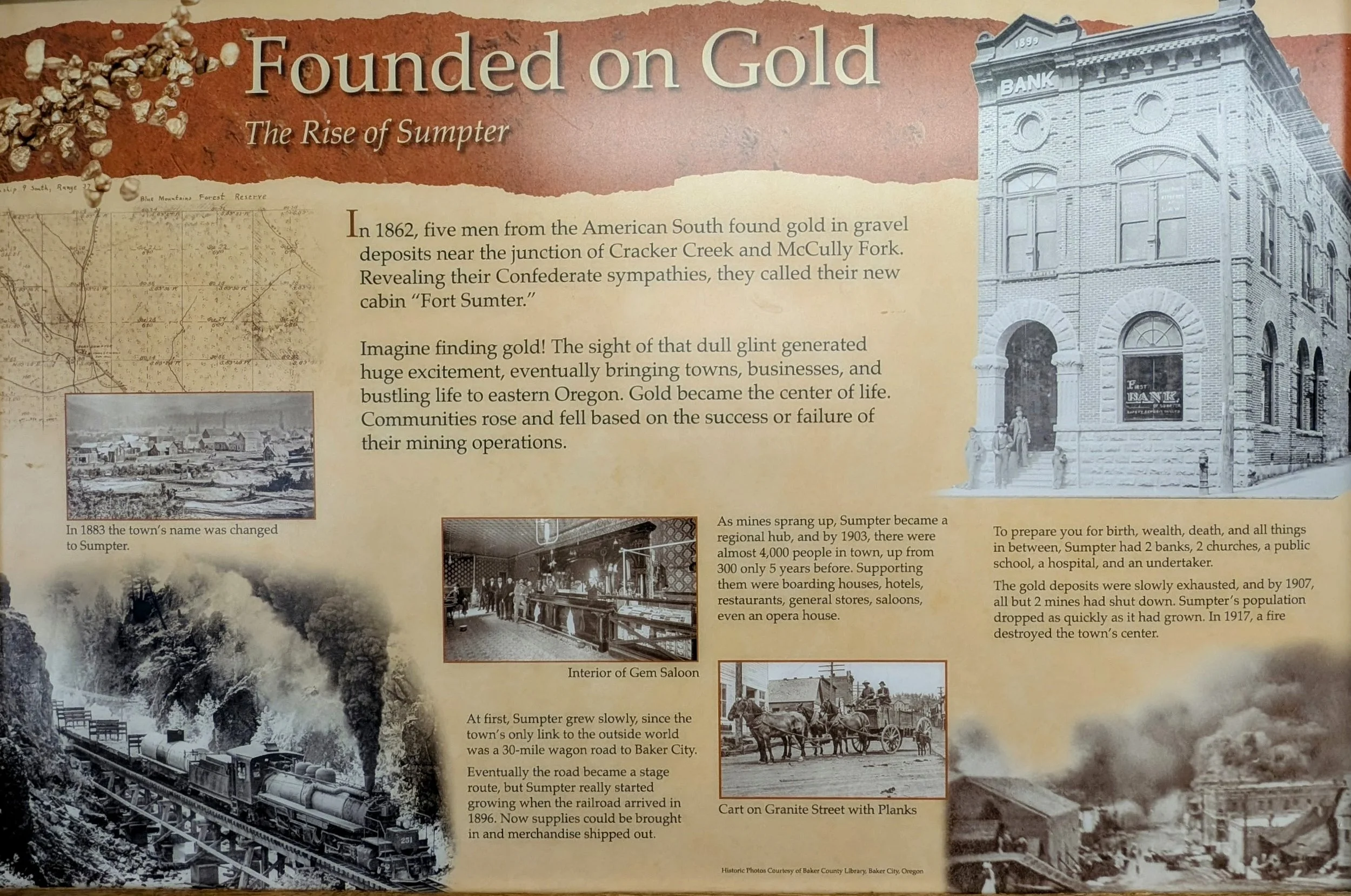
1862: Gold was first discovered in Oregon’s Blue Mountains and the nearby Sumpter Valley, leading prospectors to stream to placer mines.
Late 1912: Construction began on the first Yuba-style dredge, Powder River Gold Dredging Company No. 1, just south of Sumpter.
1913–1914: Dredge No. 1 began operating, traveling downstream toward McEwen. Between February 1, 1913, and October 8, 1914, it dredged 100-105 acres.
1915: The Powder River Gold Dredging Company started its second dredge, No. 2 Dredge. It operated its life working north, up the McCully Fork and Cracker Creek toward Bourne.
1917: A major fire burned much of the town of Sumpter.
1923: The Powder River Dredging Company shut down and dismantled the No. 2 Dredge, shipping its equipment to Central Washington, though the hull remains in its pond near Bourne Road.
1924: The No. 1 Dredge was shut down. Its hull remains where it stopped in McEwen at the current Sumpter Valley Railroad depot. The valley was quiet for over a decade following the closure of the first two dredges.
Sumpter No. 3: Construction and Operation (1934–1954)
1934: The Sumpter Valley Dredging Company began work on a new, improved gold dredge. This was influenced by President Franklin D. Roosevelt's policy, which raised the price of gold from $20.00 to $35.00 an ounce.
1935: The new dredge, Sumpter No. 3, was constructed, incorporating some machinery from the antiquated No. 1 dredge. It was built on the bank and launched into the water. The dredge began operating, running almost continuously, 24 hours a day, seven days a week, every day of the year (except Christmas and the Fourth of July).
1938: The dredge was reported to have washed as many as 10 acres of river bottom land in a month.
1942: The dredge was shut down when all non-essential mining operations were ordered to cease production for the duration of World War II.
1944: W. H. Cullers, President of the Sumpter Valley Dredging Company and the dredge's engineer, died.
July 5, 1945: The dredge resumed operation under a new owner, the Baker Dredging Company. The gold recovery system was upgraded from sluice boxes to a Jig System, increasing recovery from 70% to 95%.
1950: The Baker Dredging Company sold the dredge to the Powder River Dredging Company.
August 1954: The Powder Dredging Company ceased operations, leaving $100,000 in debt due to high expenses and a fixed gold price. Sumpter No.3 produced an estimated 4.5 million of the combined total of approximately $10 million grossed by all three dredges.
Preservation and Park Establishment (1971–Present)
1960: By this time, Sumpter No. 3 had already deteriorated significantly due to exposure and inactivity.
1971: The Sumpter Valley Gold Dredge was added to the National Register of Historic Places.
1992–1993: The Oregon Parks and Recreation Department purchased the dredge, tailings, and nearby property from the Trust for Public Land and private individuals.
1994: The dredge was opened to the public.
1995: Restoration work on the dredge began.
2019: A Canadian mining company proposed to reprocess the tailings to recover residual gold, but the plan did not materialize.
Today: The dredge serves as the centerpiece of the Sumpter Valley Dredge State Heritage Area, which is open to visitors from May 1 through October 31.
Exterior
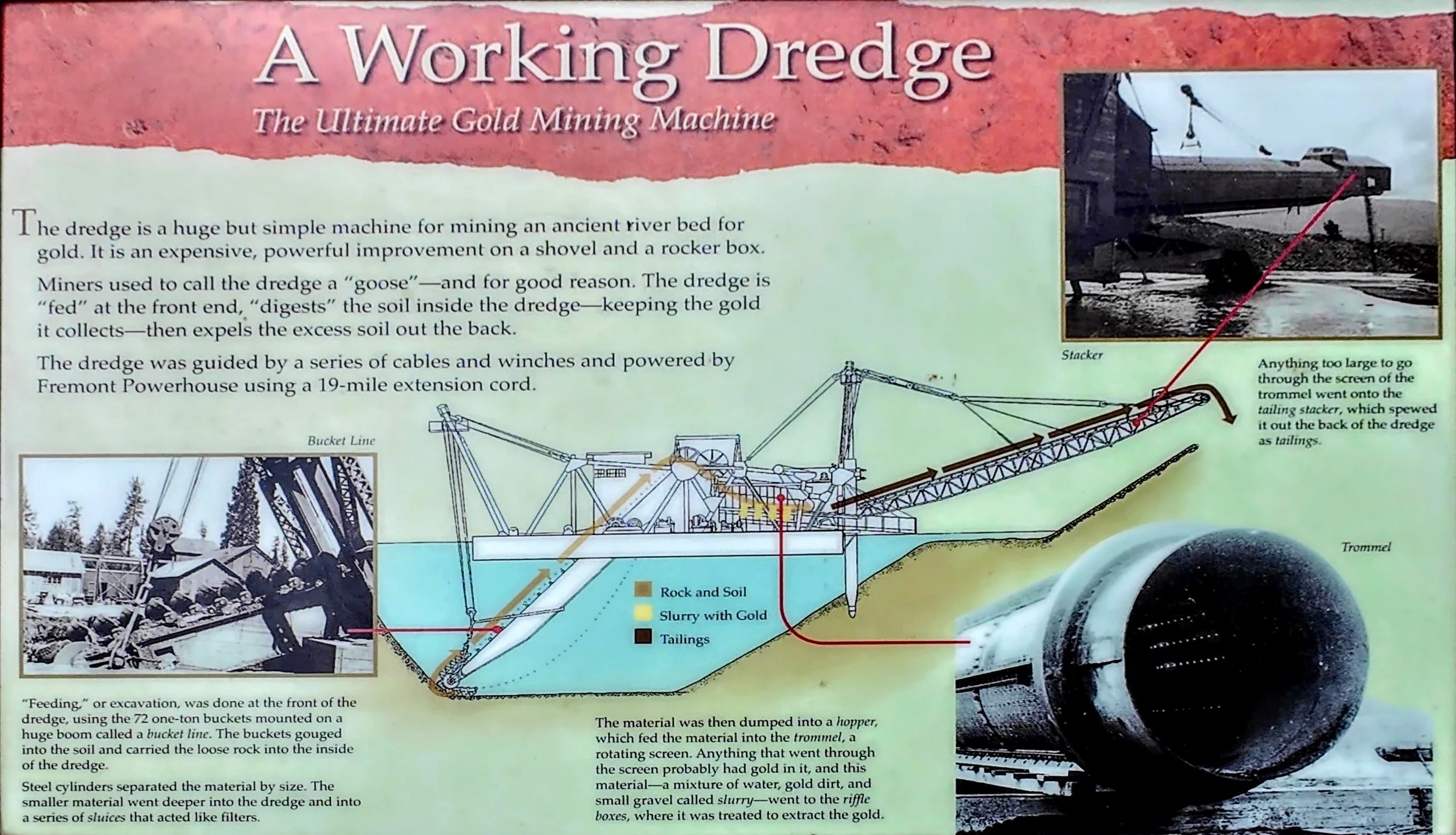
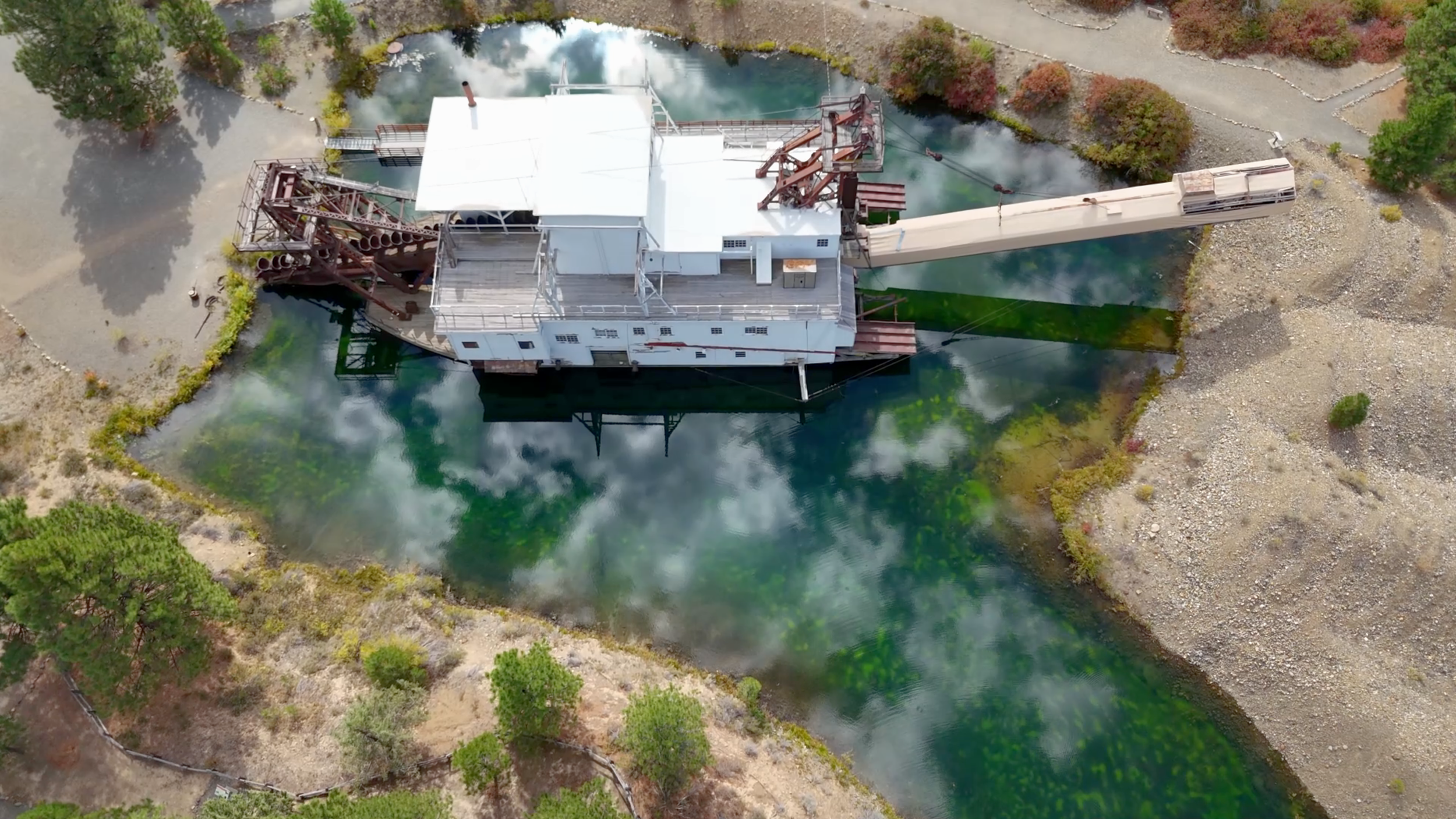
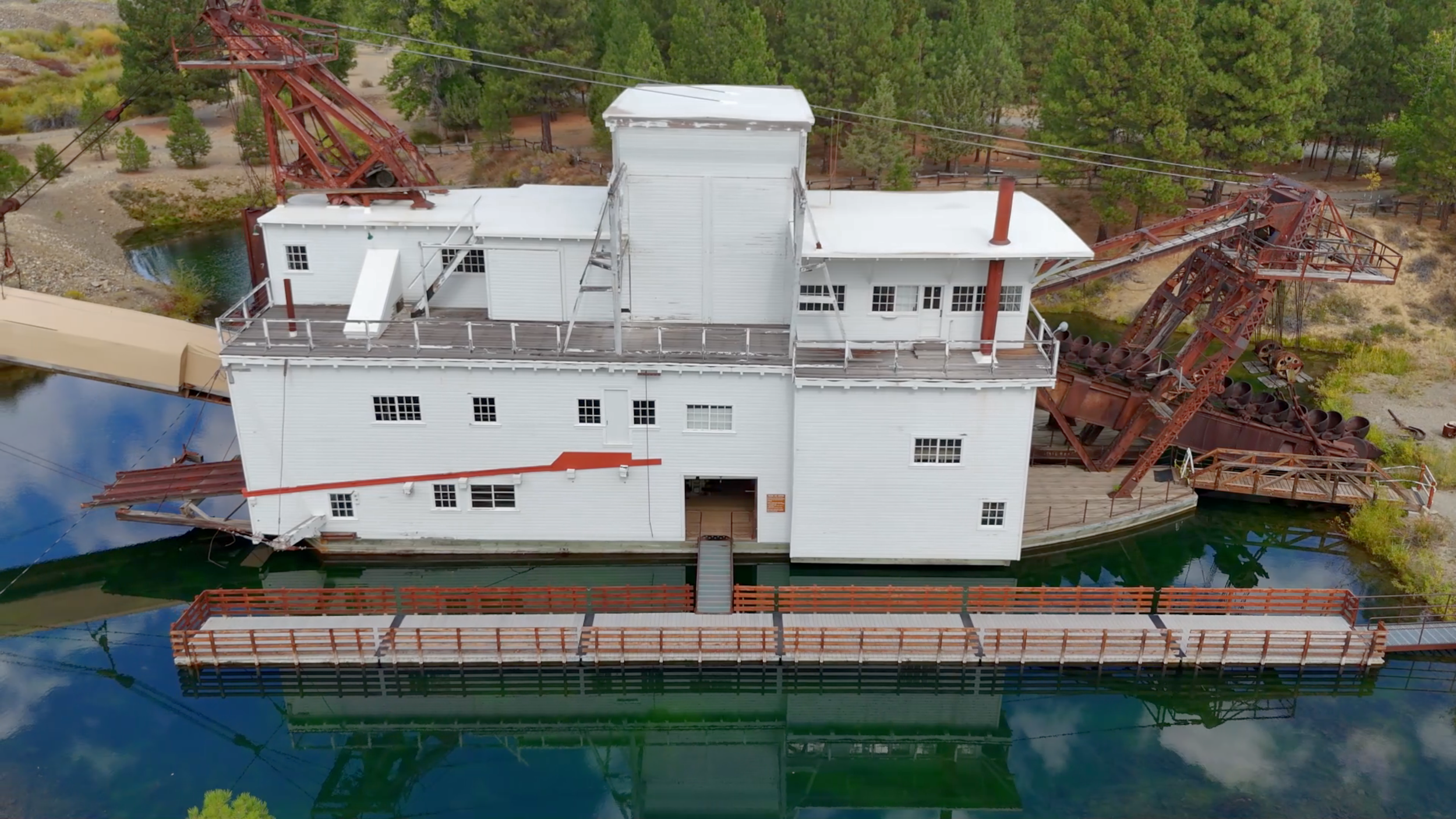
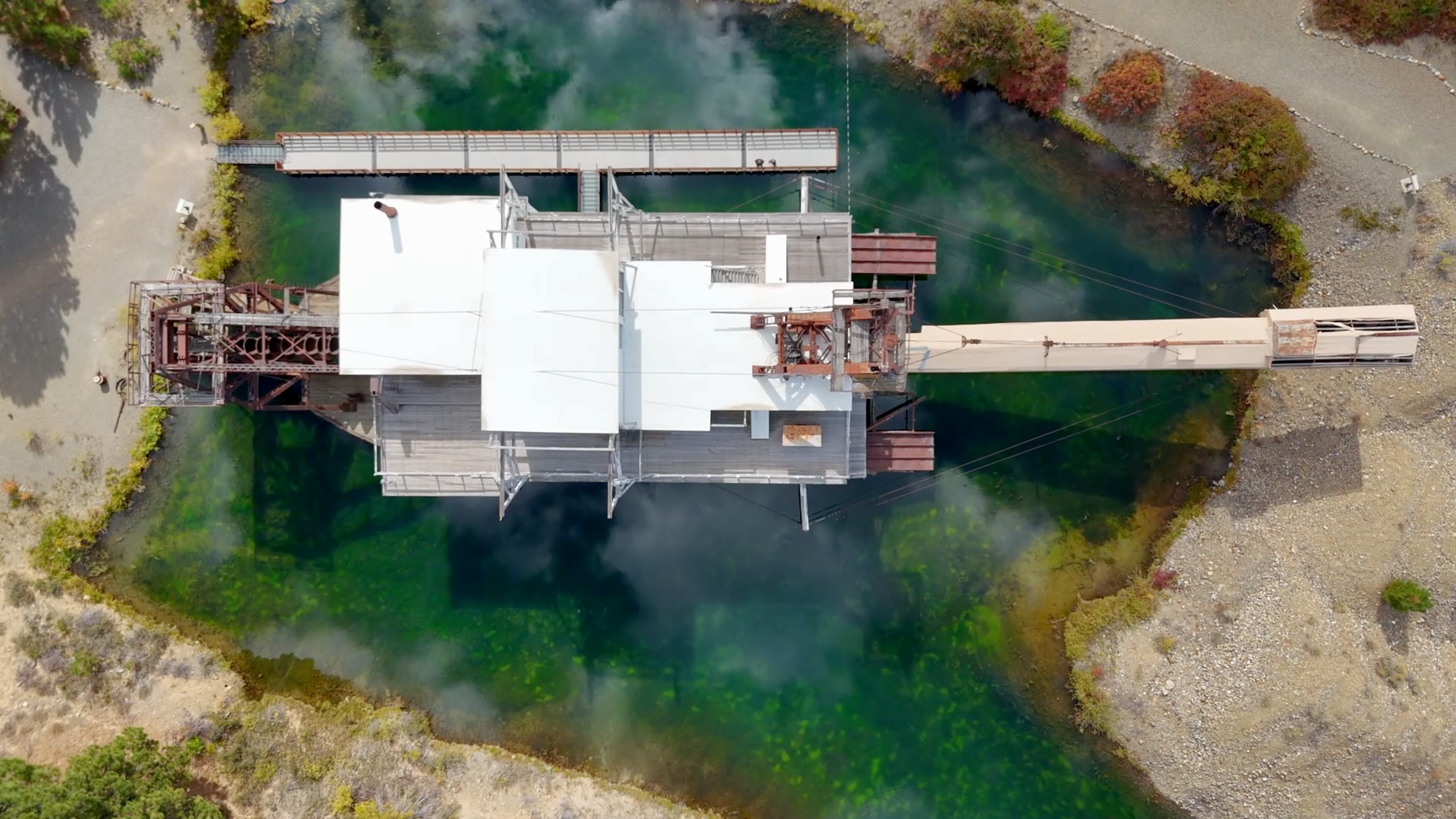
This behemoth of historic engineering measures is slightly larger than the Yankee Fork Gold Dredge. Measuring 125 feet long, 52 feet wide, and weighing 1,250 tons. Twenty-five pontoons, measuring 10x10x27 feet each, kept this monster afloat while it processed tons of material daily from the river’s bed. It could dig up to 16 feet deep, which was enough to reach the bedrock or hardpan. Each of the seventy-two buckets, weighing just over 1 ton empty, would scoop up ten cubic feet of material from the river and transfer it to the top of the ladder, where it would dump the material onto the belt that would move the material through the rest of the process. Each bucket would make a round trip on the ladder every two minutes. A system of pulleys and cables would move the bucket ladder to where it was needed to collect material.
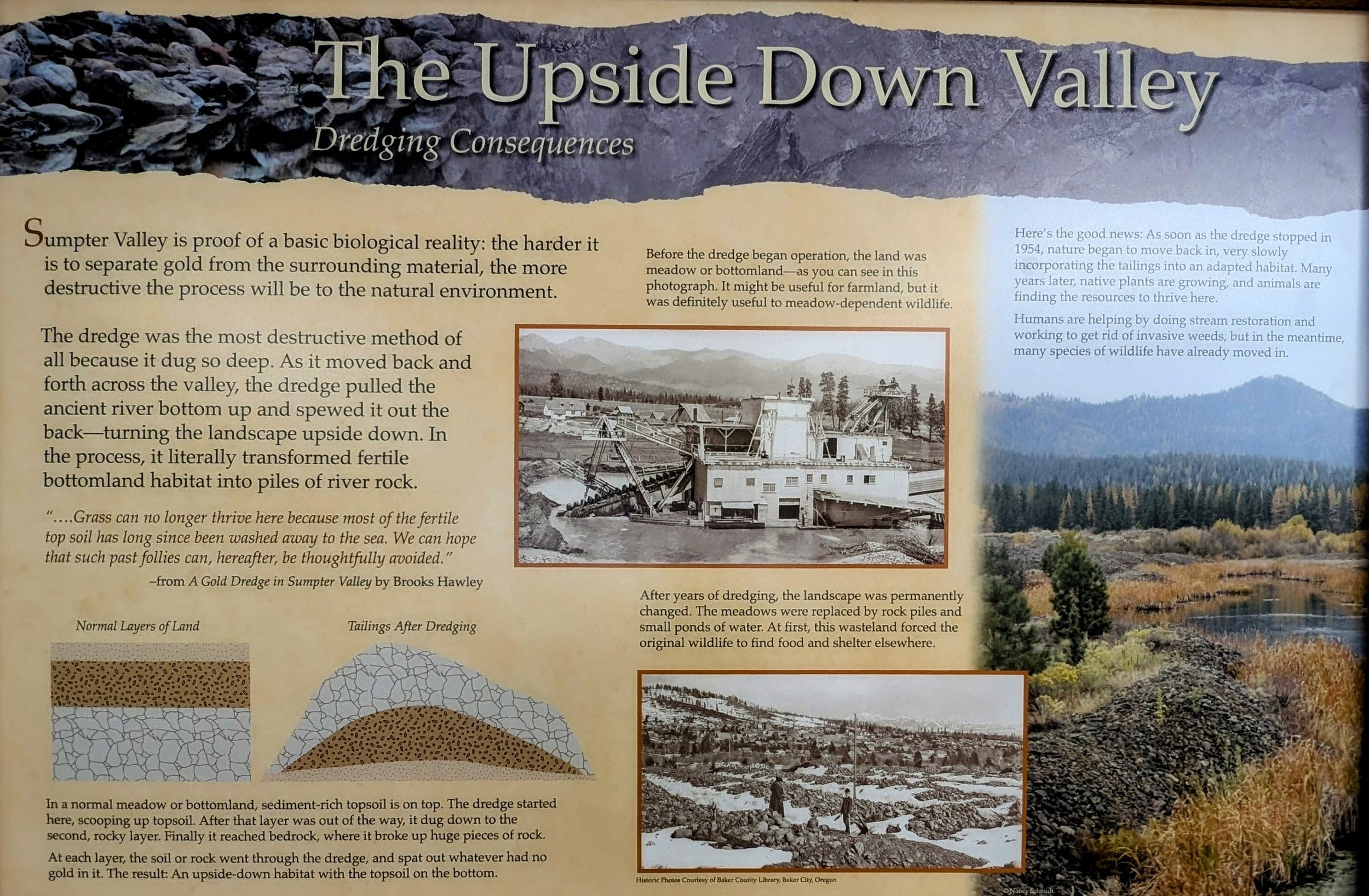
On the opposite side of the dredge was the stacker. This long arm would take the unused “tailings” (material that remained after extracting the gold) and dump it behind the dredge. The stacker is 96 feet long and houses a 36-inch-wide belt. The stacker could be moved from side to side to distribute the material better when ejected from the dredge. As you drive along Highway 7 near McEwan, you’ll see these tailings as large mounds of river rocks cover the landscape along the road. Some work is being done to restore the stream and remove invasive weeds. The work is slow and will take several decades. The good news is that once the dredge stopped, nature began moving back in. Many native plants and animals have returned though they have had to adjust to the transformed habitat they left.
Interior
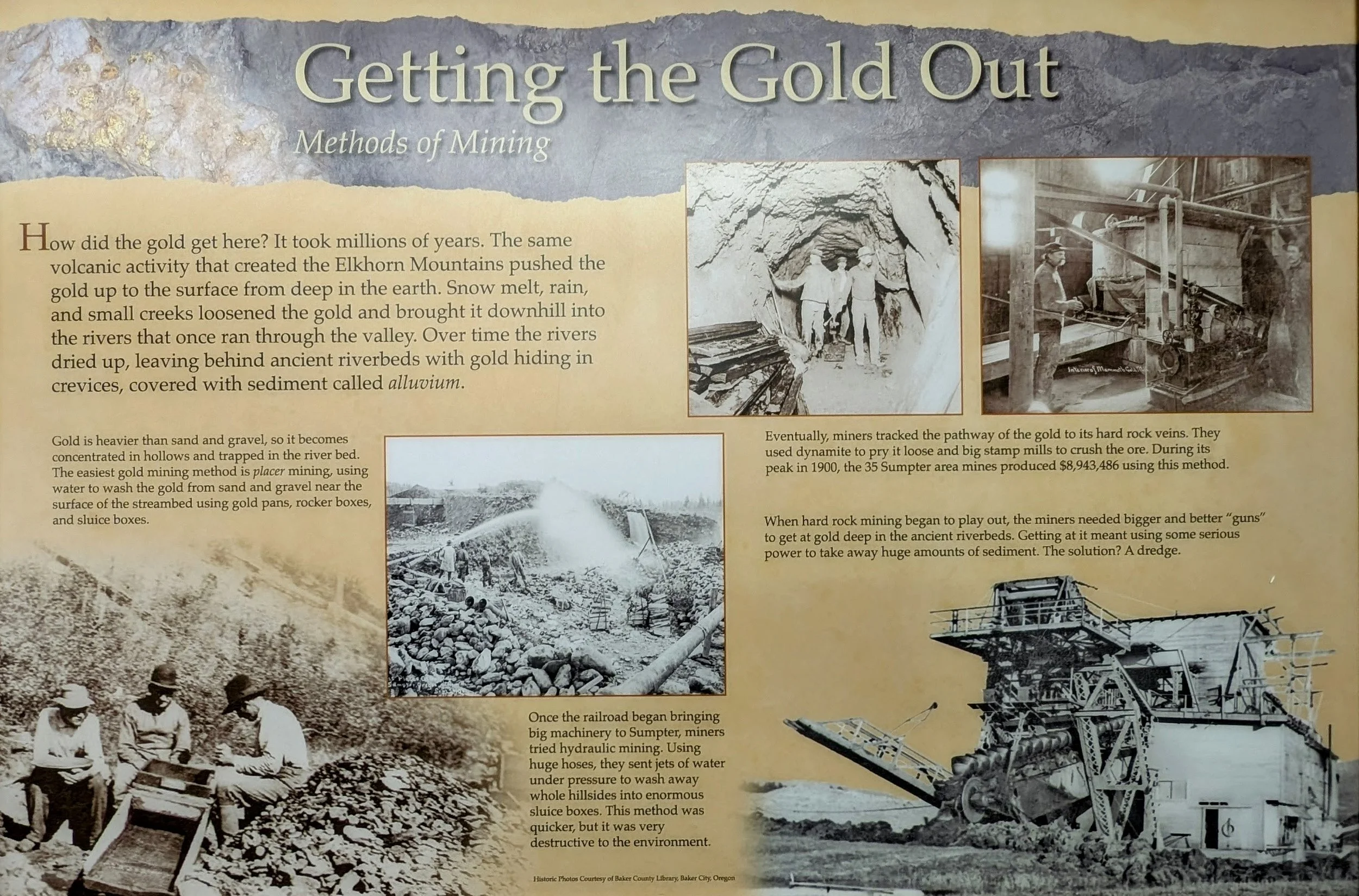
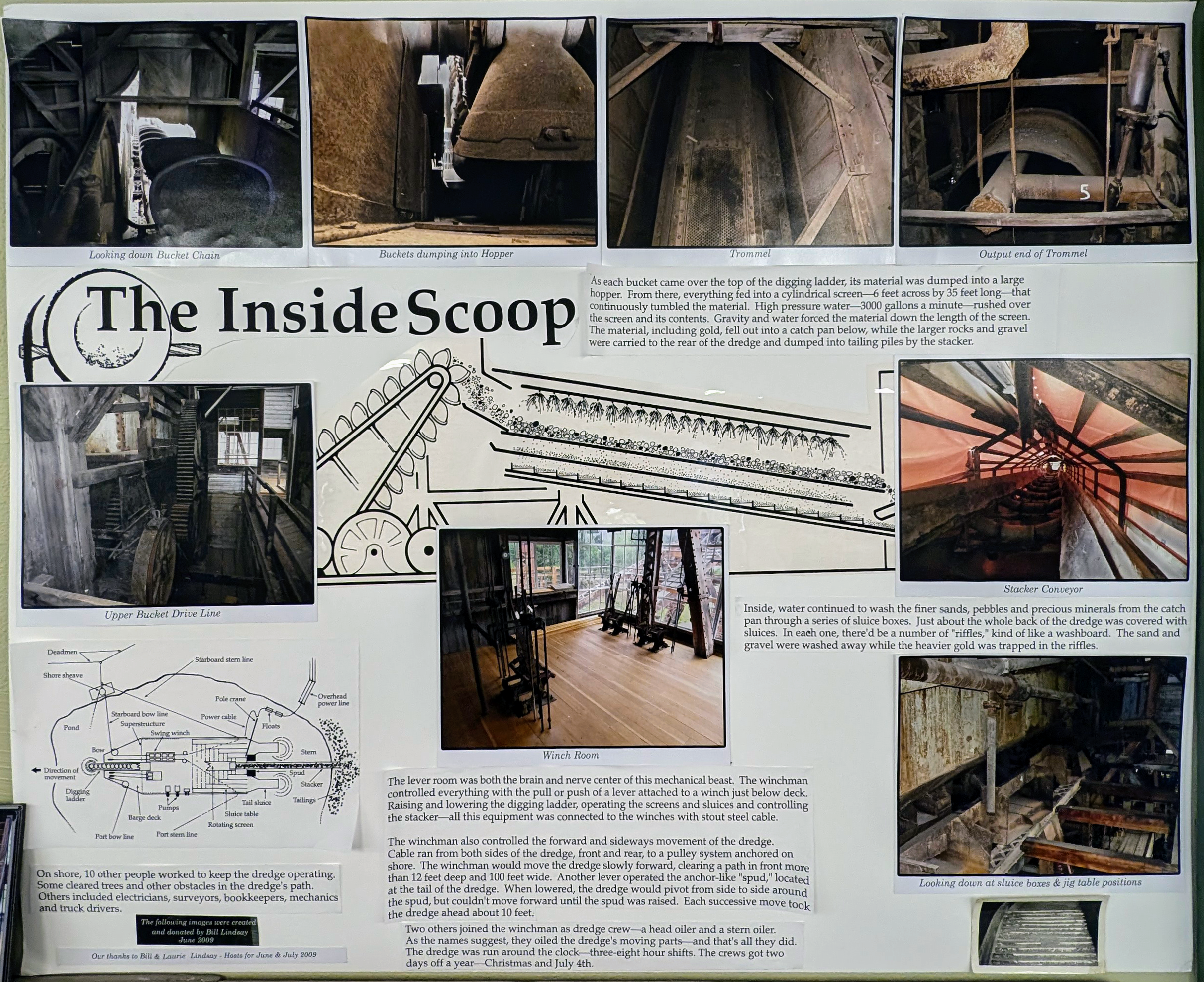
Once the material is dropped from the buckets, it tumbles through giant cylinders with small holes. Imagine a massive washing machine drum. This drum spins slowly while water is pumped over the material. The water would wash the small material through the holes in the trommel plates, while the larger material would continue down the trommel towards the stacker. The Sumpter Dredge had a trommel plate with 3/4-inch holes, unlike the Yankee Fork Dredge, which used trommel plates with different-sized holes that could be swapped out as needed.
The smaller material that fell through the trommel's holes ended up in the sluice boxes, where the gold, five times heavier than gravel, became trapped in the sluice cleats, while the other material washed through the system. Workers would manage the flow of water over this gold-infused material to ensure no gold was being washed away. Anything that wasn’t gold was transferred to the stacker and ejected out the back of the dredge into piles of tailings.
Summary
Sumpter Valley Gold Dredge does not offer the same experience as the Yankee Fork Gold Dredge. There are no volunteers except a forest ranger who might be able to tell you a few things about the dredge. There are certainly no folks who had family that worked on the dredge during its working days. There is minimal access; only sections of the first floor are accessible. Most of the internals are scattered across the floor. There are several signs with general information, but they lack any unique history of the dredge and the people who worked it. In all, it is beautiful on the outside, moreso than the Yankee Fork, but lacks everything else. It is worth visiting, but you should also make the trip to Custer, Idaho, to see the Yankee Fork Gold Dredge, where it feels like you truly stepped back into history.
The surrounding area is gorgeous and has a lot of other fun activities, such as:
Train rides in McEwan
Camping, fishing, and boating at Philips Lake
Touring the Baker City Heritage Museum, the historical Baker City downtown, and the Geiser Pullman Park
Head south of Sumpter for the Painted Hills and Blue Banks